Whoever started talking about a ‘golden opportunity’ didn’t know the value a diamond has to an explorer here in Iceland. The Diamond Circle is your gateway to the north of Iceland and all its beautiful landscapes and natural wonders, not too often accessible (not without some hassle anyway). If you’re wondering what treasures a Diamond Circle Iceland itinerary holds, read on.
We not only get you the lowdown on the Diamond Circle itself and provide you with a sample itinerary, but we also give you some valuable local insights and advice to ensure the road trip of a lifetime. So, without further ado, let’s dive right in!
What is the Diamond Circle?
The Diamond Circle is a 250-kilometer (155-mile) loop route dedicated to exploring the northern parts of Iceland. This route will take you to some of our most famous sights, beautiful natural wonders, exciting activities, and the most popular cities and towns.
But since our north is generally colder with harsher weather conditions, it’s not always possible to drive the Diamond Circle without rattling the nerves, so choose the time of your road trip carefully.
Why Explore by Campervan?
There are many perks to cruising the Diamond Circle with a campervan, such as:
You’re the Captain of Your Road Trip Adventure
There’s no official tour itinerary you’re forced to stick with – you decide which destinations and stops make it onto your road trip.
You’re the Only Clock Keeper
There’s no tour guide impatiently waiting for you at a bus, or an expensive hotel booking relying on you being on time for check-in. You decide when you wanna go, where, and with a camper, accommodation is no biggie, so plans can change, and you just find the nearest camping site.
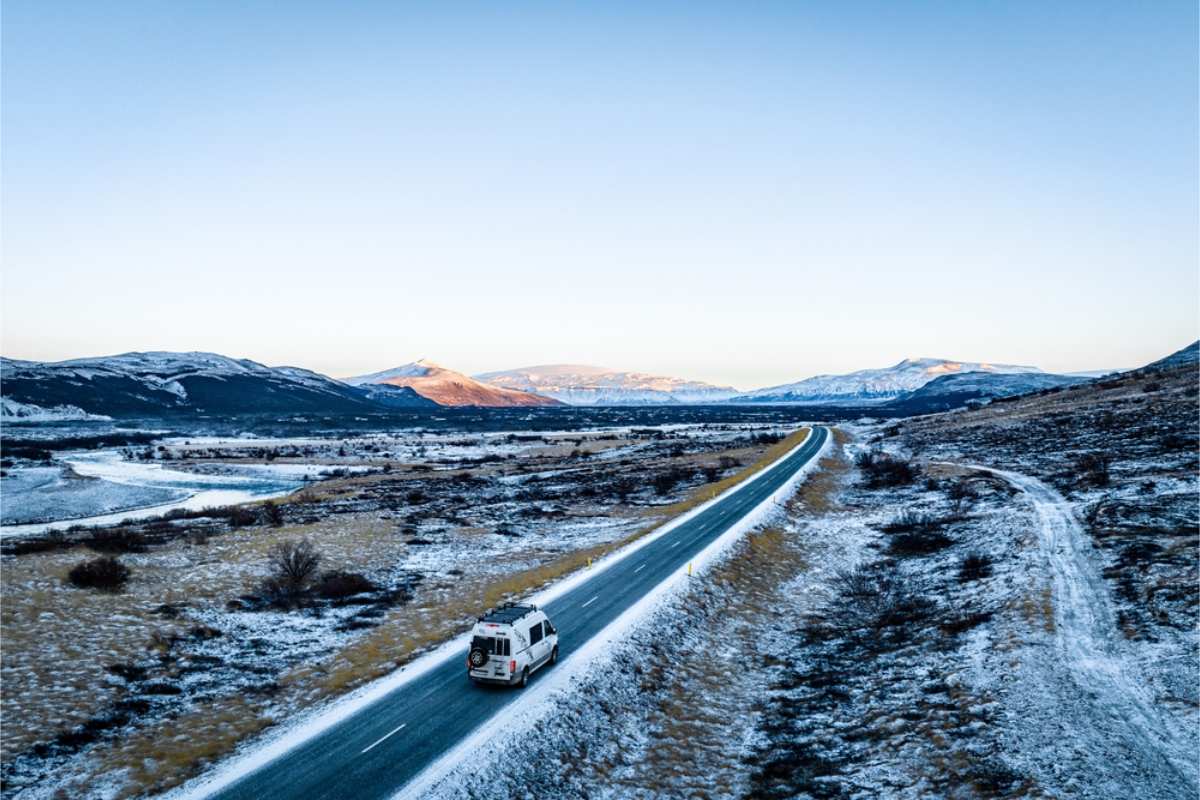
It’s a 2-in-1-Deal
With just one smooth transaction, you’ll have taken care of both your transport and your accommodation; what’s more comfortable than that?! You’ll be vacaying, as snug as a slug, all your creature comforts with you wherever you go.
It Saves You Stax on Accommodation
Not only are you living your best slug life, but you also get to stay at campsites (by far the most budget-friendly accommodation on the island). And, if you plan your road trip during the months of May to September and get yourself the Camping Card, you’ll barely notice having to pay for your stays!
It Gets You the Closest to the Action
Our campsites are not just the most cost-effective accommodation option; they often get you the closest to the action. Whether it’s a famous hiking trail, a famous waterfall, or a fjord just meters away where you can go kayaking, a camper can often get you a front-row seat to beauty and convenience that not many travelers are privy to.
…the Closest Without Being Uncomfortable
Usually, the term ‘camping’ sends shivers down many people’s spines. It conjures up images of something advertised as a holiday, but that feels just like a Bear Grylls episode. That’s simply not the case with a camper; now you can rest assured that you’ll be camping in comfort!
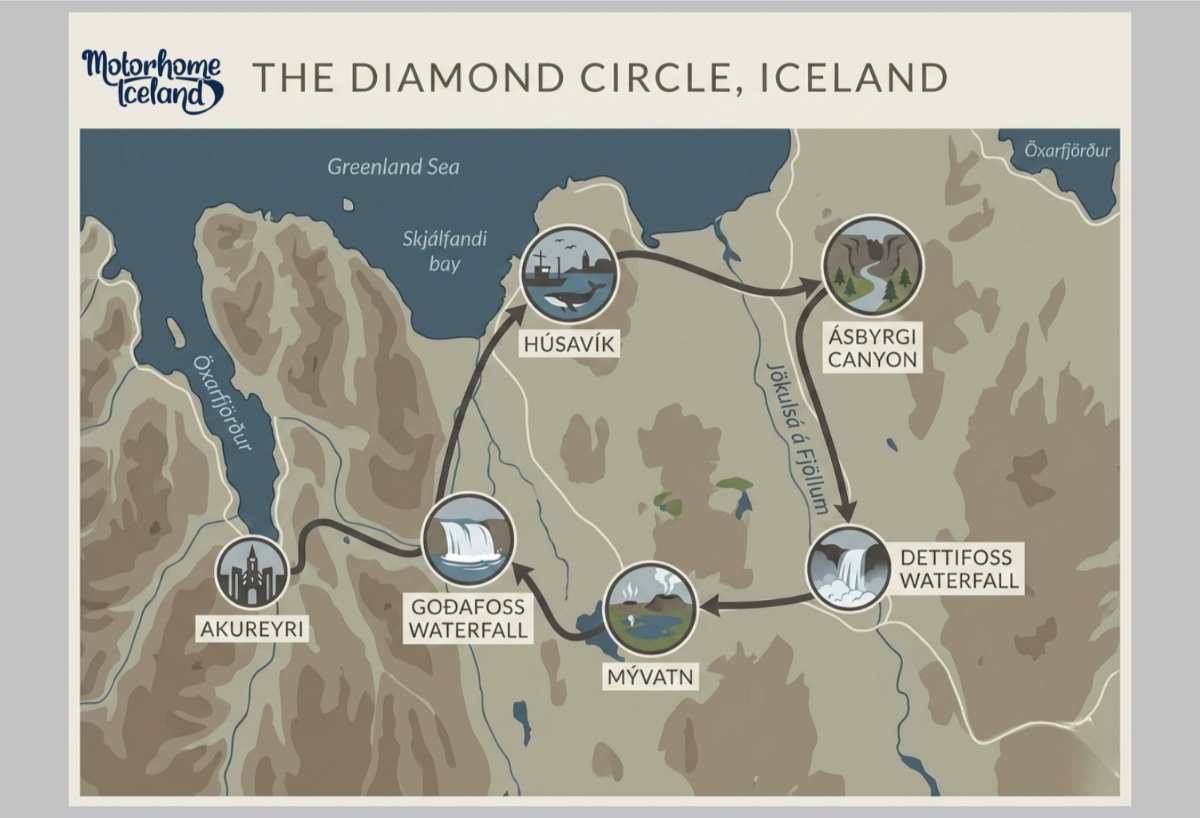
The Diamond Circle Map: An Overview
Since it’s a loop route, you can decide whether to drive it clockwise or counterclockwise. It will mainly depend on which direction you’re coming from. However, the general gist remains the same (even if you do it back-to-front):
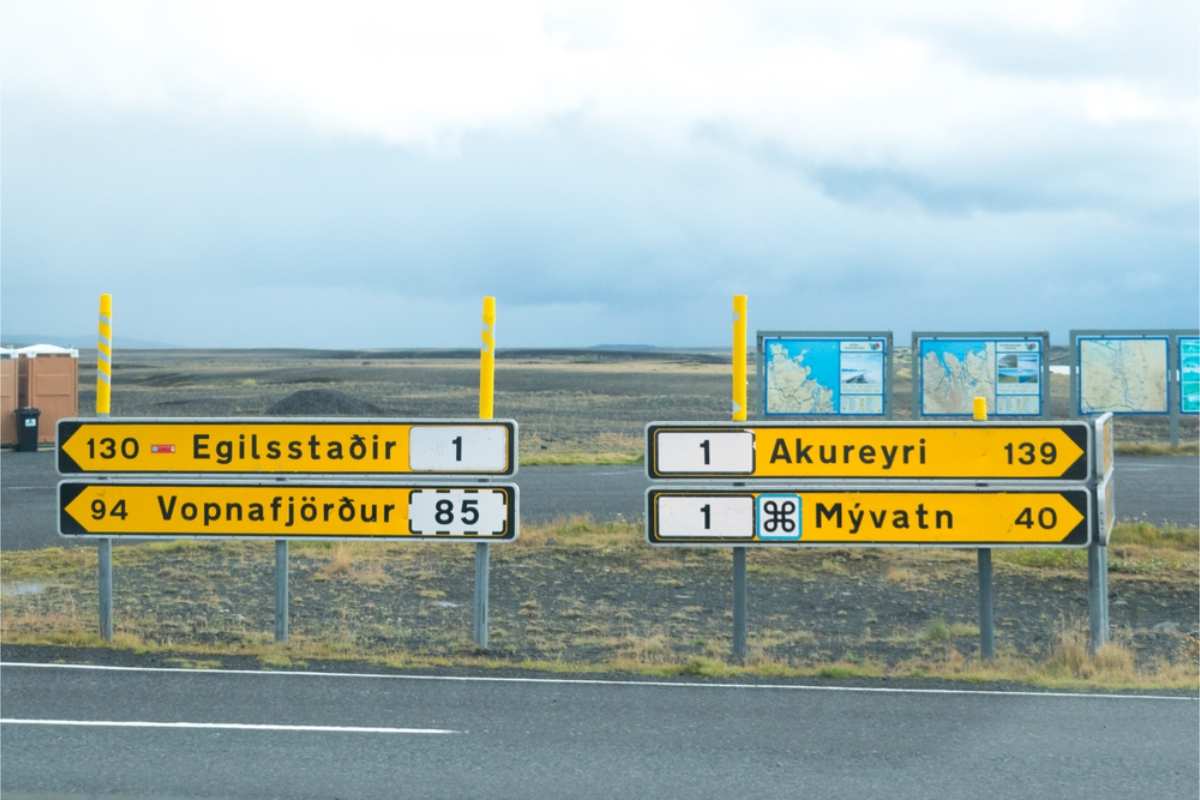
Akureyri → Husavik → Asbyrgi Canyon → Dettifoss Waterfall → Myvatn → Godafoss Waterfall
Driving Distances and Timing
As we already mentioned, the entire Diamond Circle loop is 250 kilometers (155 miles) long. So, technically, you could drive the whole route in just 4 hours without stopping, but that defies the purpose. So, taking all the potential stops along the way into account, we recommend you set aside at least 2 to 3 days to explore the area properly. In terms of driving distances, you’re looking at the following benchmarks:
- Akureyri – Godafoss – Myvatn = 50 kilometers (31 miles) with an estimated drive time of 45 minutes.
- Myvatn – Dettifoss = 60 kilometers (37 miles) with an estimated drive time of 50 minutes.
- Dettifoss – Asbyrgi = 36 kilometers (22 miles) with an estimated drive time of 30 minutes.
- Asbyrgi – Husavik = 60 kilometers (37 miles) with an estimated drive time of 45 minutes.
- Husavik – Akureyri = 90 kilometers (56 miles) with an estimated drive time of 60 minutes.
Just keep in mind that the following influences driving time:
- Weather conditions such as heavy winds, rainfall, or snow and ice on the road.
- The type of roads. It’s quite easy to make guesses regarding driving times on our paved and well-maintained main roads, but the moment you start taking our little detours to certain attractions, you’ll find that they’re gravel roads. Although these are also generally well-maintained, they do require extra precaution and a slower pace.
The Best Stops Along the Diamond Circle Route
The following sights are the main attractions along the Diamond Circle:
Godafoss Waterfall
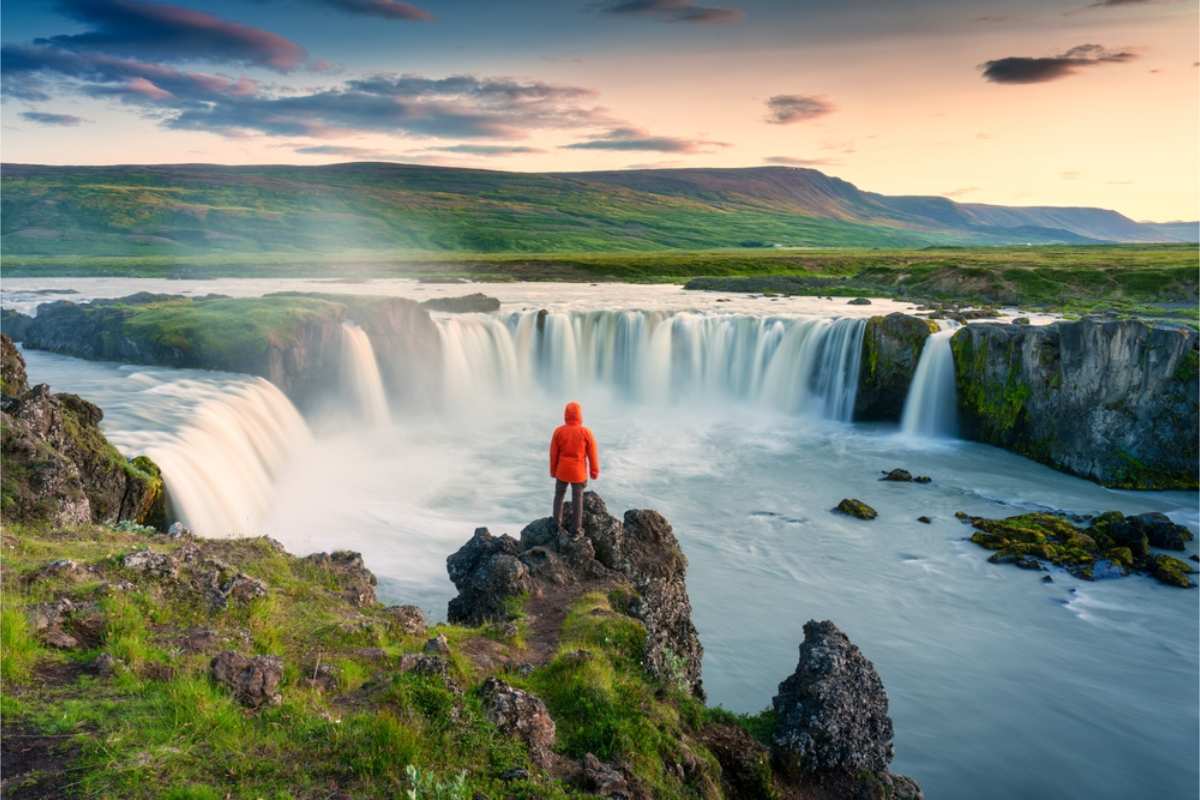
Godafoss is not just one of our jaw-dropping waterfalls here in Iceland; it’s a historic landmark. Godafoss is not considered one of our tallest waterfalls, but it’s still an impressive 30 meters (98 feet) wide with a drop of 12 meters (39 feet). However, its real magic lies in its name and the meaning behind it.
Godafoss translates to “waterfall of the gods” and has become the symbol of the island's official conversion from paganism to Christianity. Legend goes that shortly after discussions regarding Iceland’s stance on religion at the Althing (Iceland’s first parliament) in the year 1000 AD, the lawspeaker, Porgeir Ljosvetningagodi, threw all his pagan statues into the waterfall, officially marking the end of an era.
You can view the falls from two angles: the west side or the east side. Both are not even a 5-minute walk from the parking lot.
Lake Myvatn and Surroundings
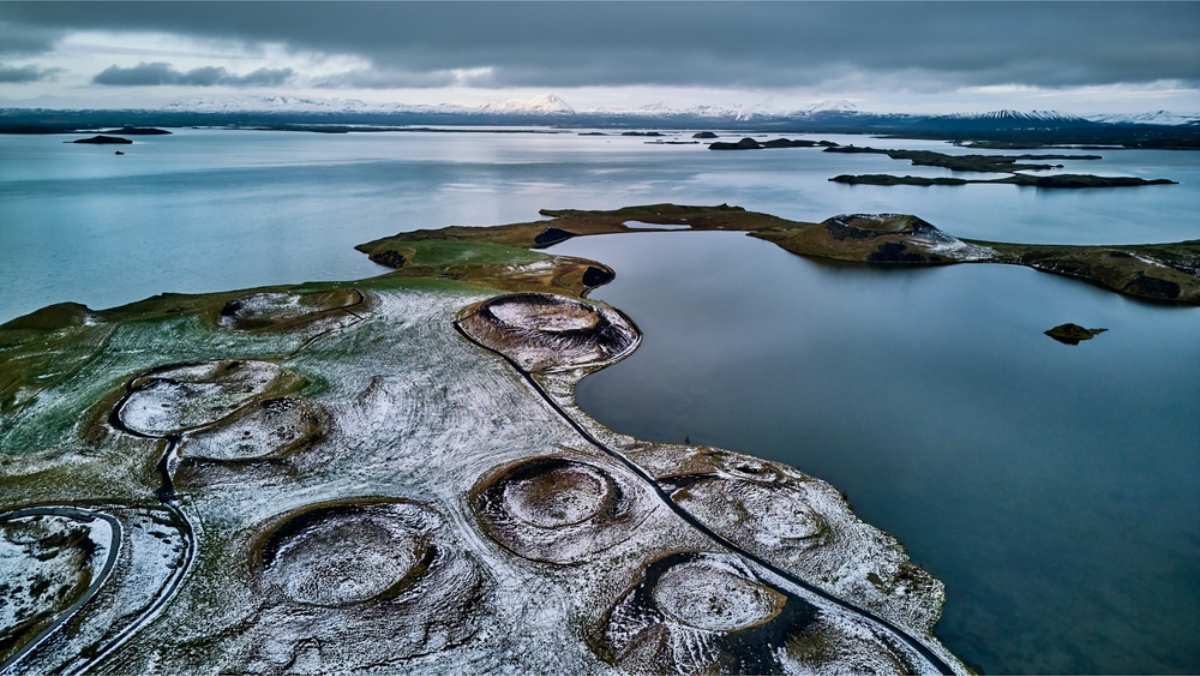
Lake Myvatn is an absolute gem of the north. It’s hard to believe that this lake was created roughly 2300 years ago after a volcanic fissure eruption, causing land formation, releasing trapped water, and ultimately building up what we see as a lake today. As you might imagine, the lake is a birder’s paradise, especially in the spring.
But Lake Myvatn is also famous for its midges (a tiny, blood-sucking creature, similar to a mosquito) during the warmer months, so be sure to take insect repellent with you. While many simply enjoy hiking around the lake, taking in the breathtaking views, you’ll also find many other natural wonders along its shores, such as the Dimmuborgir Lava Fields, with all its interesting rock formations.
Hverir Geothermal Area
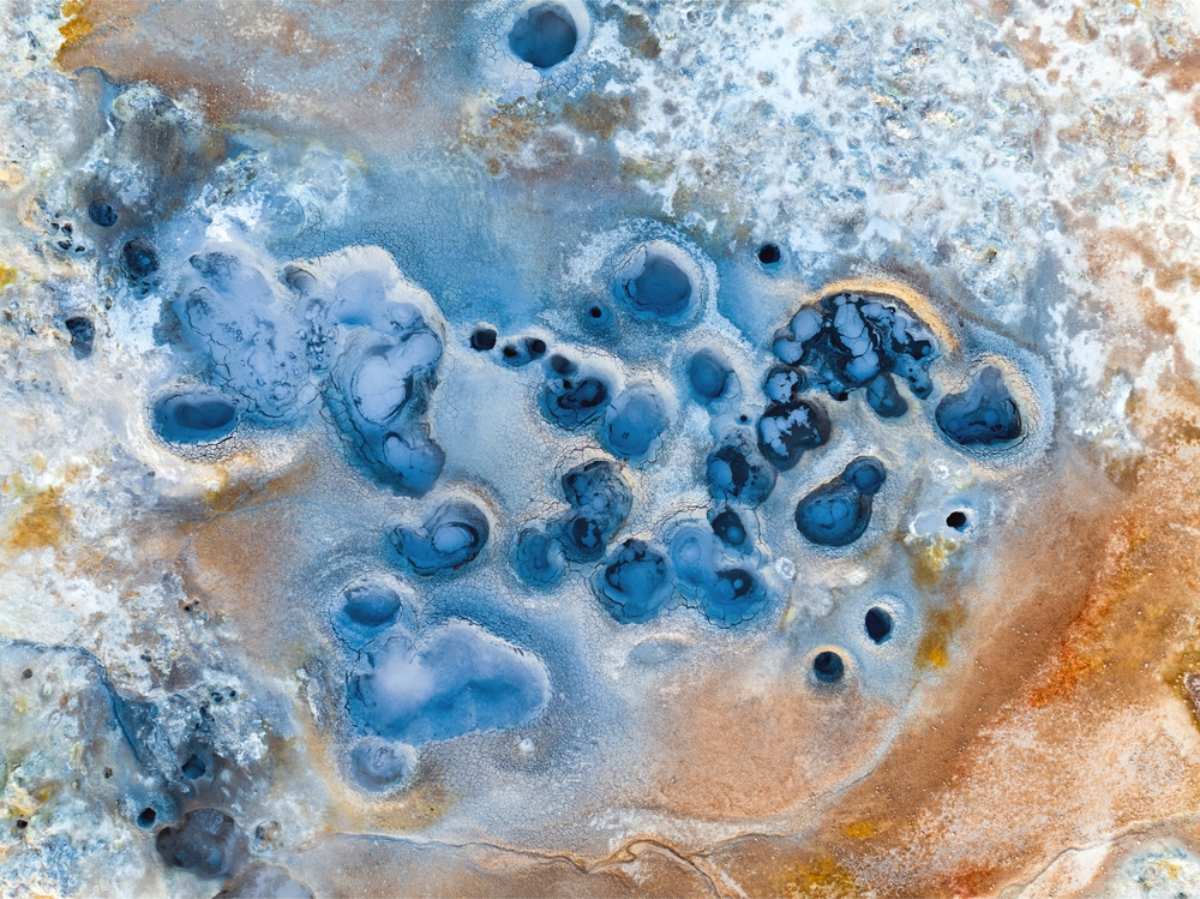
Hverir Geothermal Area is also not too far away from Lake Myvatn. This area looks otherworldly with its barren landscape of yellow and red. Also known as the Namafjall Geothermal Area, Hverir is known for its famous discoloration (due to mineral and sulphur deposits), steaming vents, and boiling mud pots. So, definitely not a geothermal area that should be confused with a geothermal pool.
Grjotagja Cave
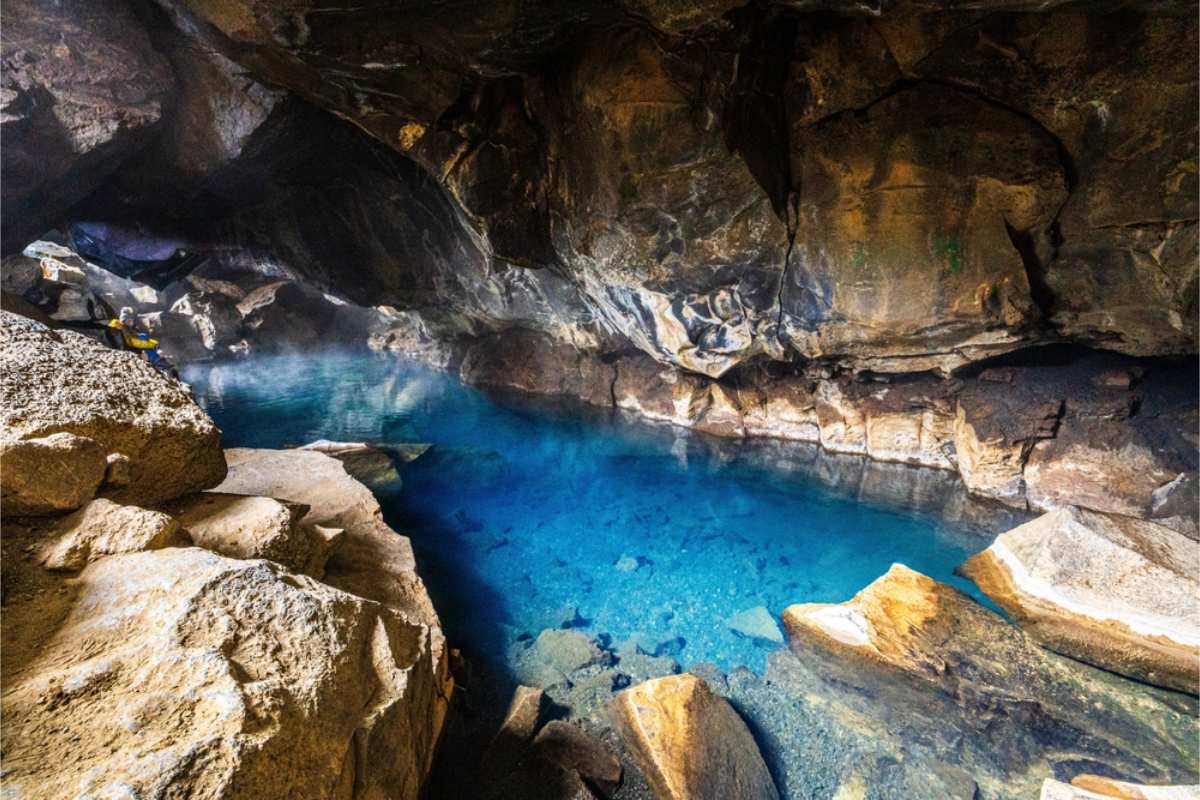
If the Grjotagja Cave looks familiar when you get there, it’s probably because you’ve seen it before (well, kinda). This picturesque lava cave with its natural hot spring inside became the romantic setting for a famous Game of Thrones scene between Jon Snow and Ygritte.
But what people don’t know is that the hot spring became too unpredictable to swim in after volcanic eruptions in the 70s (often reaching temperatures of 50+ degrees Celsius (122+ degrees Fahrenheit). That’s why the steamy Game of Thrones scene was actually safely shot in a studio somewhere in LA. However, it has not deterred fans from flocking to the location, and who can blame them? It truly is beautiful.

However, they might start feeling a little differently about that scene if they knew the real history behind Grjotagja. In the 18th century, a local outlaw called Jon Markusson actually lived in the cave, and the hot spring was simply his personal bathtub!
Dettifoss Waterfall
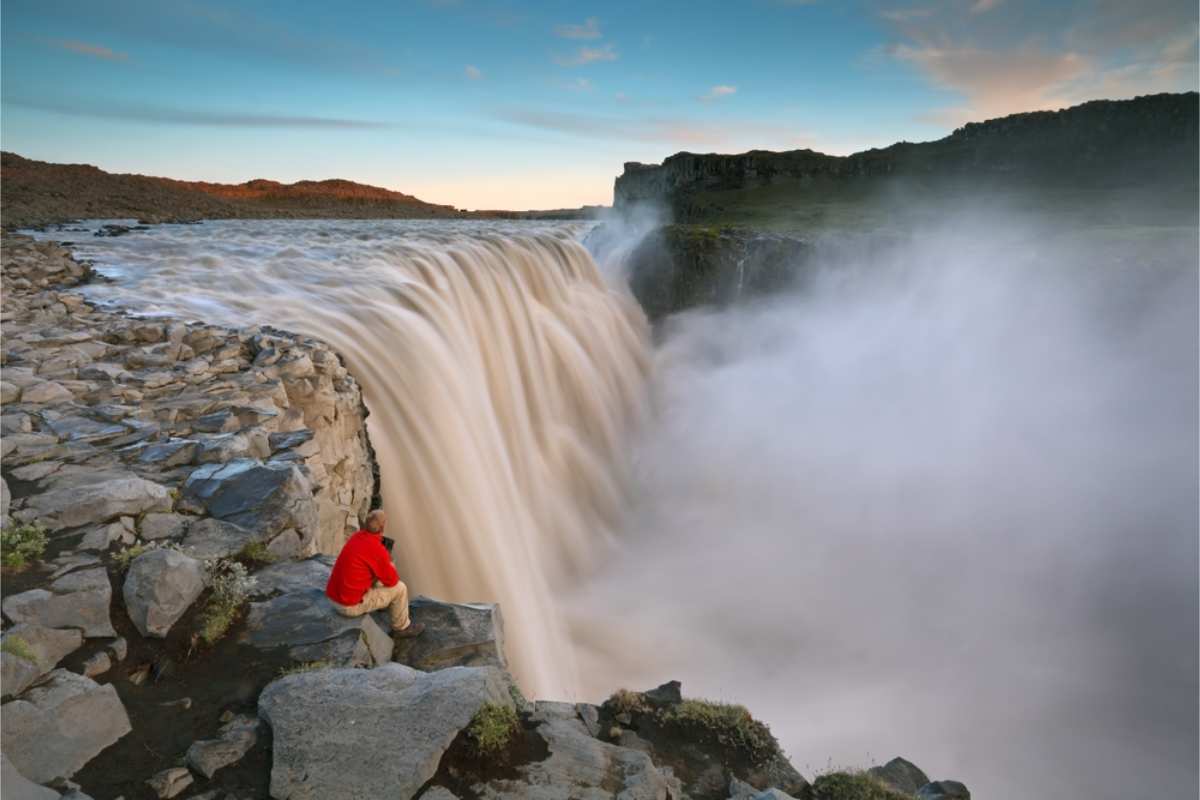
Dettifoss Waterfall is one of our most impressive waterfalls in Iceland. To say that this waterfall is massive would be an understatement. It’s a staggering 100 meters wide with a drop of 45 meters. But it’s the power of the water that’s even more impressive. In fact, Dettifoss holds the title as the second-most powerful waterfall in all of Europe (only recently dethroned by a waterfall in Switzerland).
You’re looking at 193,000 liters of water rushing down the cliffs EVERY SECOND! You’ll find various viewpoints from which you can view the waterfall at various angles. Just remember to bring your raincoat – a powerful waterfall like this will leave you drenched, no matter where you’re standing around it.
Asbyrgi Canyon
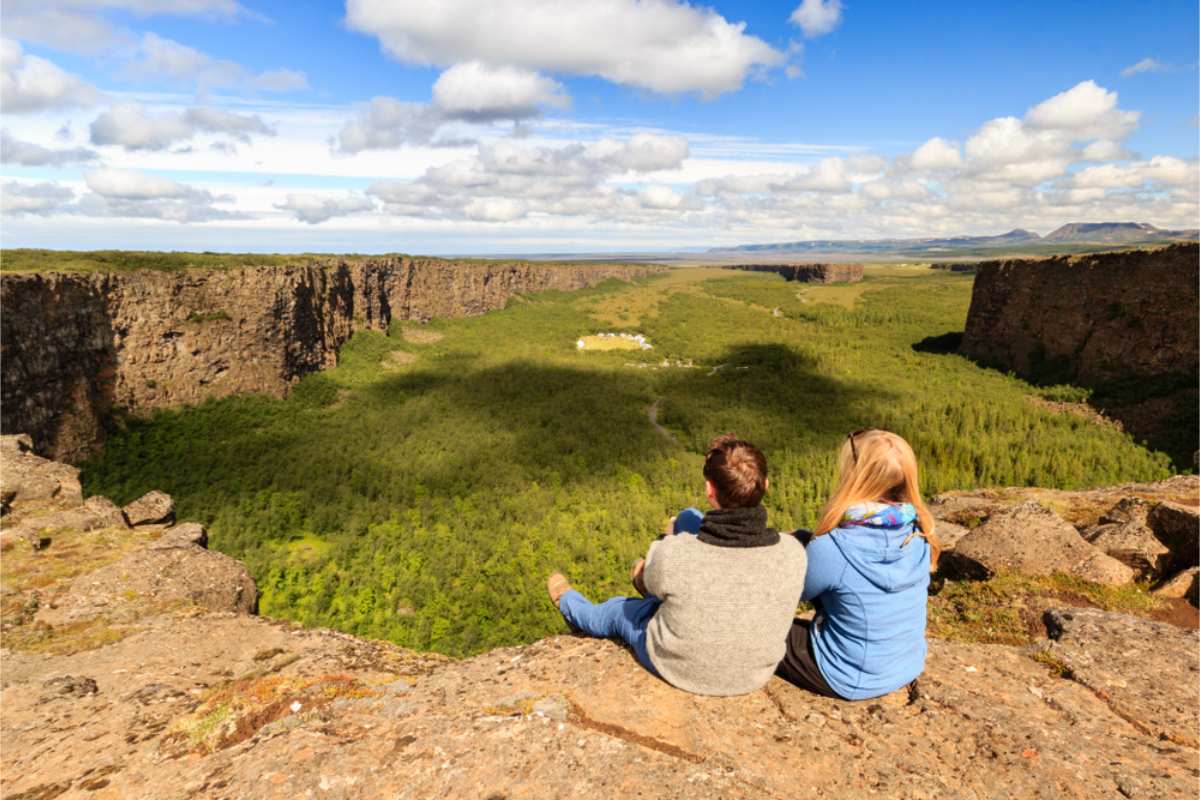
This beautiful horseshoe-shaped canyon is 3.5 kilometers (2 miles) long and 1.1 kilometers wide (0.7 miles), almost seems like its dramatic cliffs of 100 meters high hold a magical realm of forest and other lush vegetation. But it’s not just the natural beauty that attracts visitors to Asbyrgi; it’s its folklore.
You see, legend goes that it’s not just a canyon in the form of a horseshoe, but the actual imprint of a horse, and a godly one at that! It is said that Odin (the head Norse god) was traversing the landscape with his eight-legged horse, Sleipnir, leaving the dramatic impression behind.
Historically and archeologically, the canyon was formed by disastrous glacial flooding, but the story of an 8-legged galloping horse definitely captures the imagination more. Once you’ve parked your camper in the parking lot, you can walk down to various viewpoints and trails to explore the canyon thoroughly.
Husavik and Whale Watching
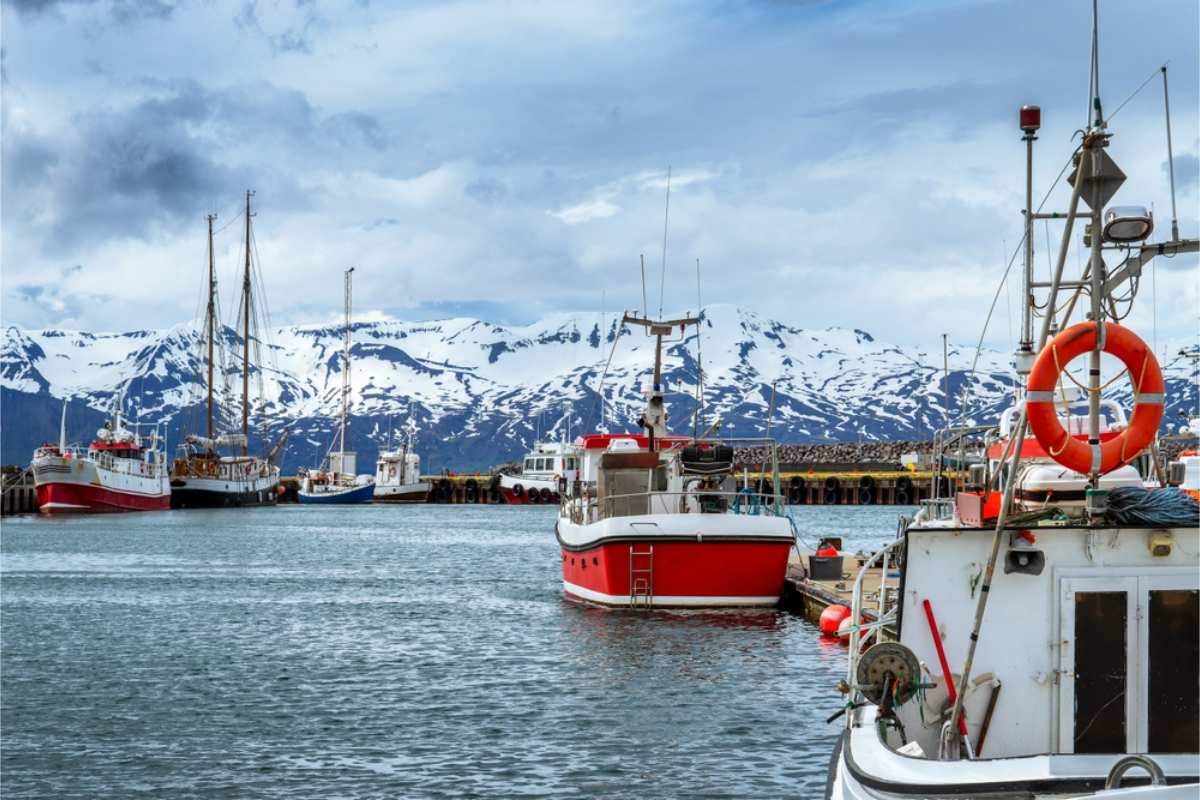
Husavik is one of our larger cities in the north, but its claim to fame really lies in the fact that it’s the so-called whale capital of Iceland. So, if you’re visiting Husavik, whale watching should be at the top of your to-do list, especially during our official whale season from May to September, when we have migratory whale species also calling the island their temporary home. You can expect to see Orcas, Belugas, Minke Whales, Humpback Whales, and even the largest of all whale species, the Blue Whale.
If you have the time, we’d highly recommend going on one of our whale watching boat tours for the best viewing experience. But you need to book your spot well in advance if you’re planning on visiting during our peak season summer months (June to August). A few other things to do and see in Husavik are:
- The Husavik Whale Museum
- GeoSea (a geothermal ocean)
- Husavik Lighthouse
- Husavikurkirkja (Husavik’s picturesque little wooden church)
Tjörnes Peninsula and Puffins
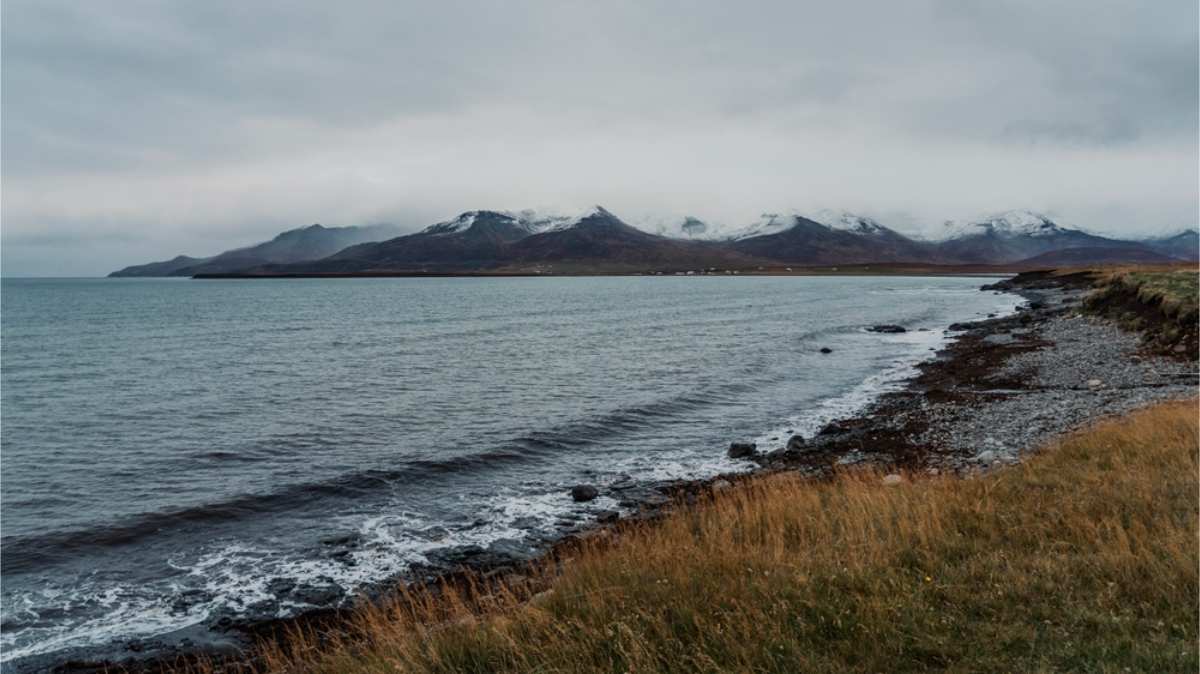
The Tjörnes Peninsula lies on the northeastern side of the island between the Oxarfjördur and Skjalfansi fjords. Although the peninsula offers breathtaking landscapes and scenery that one expects from the Land of Fire and Ice, its real claim to fame is its Puffin colonies.
You can either take a short 15-minute hike to the tip of Tjörnes, Voladalstorfa, or visit Hringsbjarg on the east of the peninsula, where you can watch them from an observation platform. Needless to say, if you’ve got Puffins on your Iceland bingo card, you’ll need to visit during our official Puffin season, which runs from May to August.
However, if you fancy yourself a bit of a birder and you plan on visiting at another time of year, you’ll be happy to know that you’ll also find a myriad of other bird species lining the cliffs here.
3-Day Diamond Circle Itinerary
Below, you’ll find a 3-day Diamond Circle sample itinerary. You can either use it as is or customize it according to your specific needs and preferences:
Day 1: Akureyri to Lake Myvatn
Driving Distance: 150 kilometers (93 miles)
Drive Time: 2 hours, 40 minutes
You’ll have the option of either road tripping to Akureyri or flying there, but whatever your preference, this itinerary officially kicks off in the capital city of the north. From here, your first stop will be Godafoss. Thereafter, you’ll do the Myvatn circuit around Lake Myvatn. This includes sights such as the Dimmuborgir Lava Field, Skutustadagigar Pseudocraters, Hverfjall Crater, and Grjotagja Cave.
Take a short break from the Myvatn circuit before taking the offramp to Grjotagja and stop by the Krafla Geothermal Power Station’s visitor center, where you’ll get some insight into the island’s sustainable energy and then visit Viti Crater to take a snapshot of its beautiful green-blue waters (unless you plan on visiting during the colder months, when the water will be frozen).
Overnight at: Vogar Camping
Day 2: Myvatn to Dettifoss and Asbyrgi
Driving Distance: 91.3 kilometers (57 miles)
Drive Time: 1 hour, 36 minutes
Today, you’ll be driving to our thunderous Dettifoss before moving on to our godly Asbyrgi Canyon, where you’ll be living your best active life by hitting some of the trails inside the canyon.
Along the way, you’ll make a quick stop at Hljodaklettar (aka the Echo Rocks), where you can test where the name comes from by shouting or singing into the abyss of the cave (don’t worry, others will be doing the same, trust us). You don’t need to feel too rushed when hiking today since you’re practically at your overnight stay already.
Overnight at: Asbyrgi Campground
Day 3: Asbyrgi to Husavik and Return
Driving Distance: 137 kilometers (85 miles), if traveling back to Akureyri.
Drive Time: 1 hour, 55 minutes, if traveling back to Akureyri.
From Asbyrgi, you’ll continue your drive to the northern tip of the route at Tjörnes Peninsula. Thereafter, head out to Husavik for some potential whale watching and other interesting sights before making your return (whether it’s road tripping your way south to Reykjavik, or grabbing a flight to Reykjavik in Akureyri).
We recommend the latter if you’re a little short on time. If you plan on road-tripping back to Reykjavik, please don’t attempt to complete the entire journey today.
Overnight at: Akureyri (before catching a flight to Reykjavik), midway between Husavik and Reykjavik, or sleep on the plane on your way off the island (if you’re catching back-to-back flights from Akureyri and Reykjavik).
Campsites Along the Diamond Circle
You’ll find plenty of campsites all along the Diamond Circle, but the following are probably the most popular:
- Vogar Camping
- Fossholl Campground
- Asbyrgi Campground
- Husavik Campground
If you’d like to check out all the other campsites in the region, please take a look at the Tjalda website or app.
The Best Time of Year to Drive the Diamond Circle with a Campervan
Since the Diamond Circle allows you to explore the northern part of the country, you’ll have a pretty narrow window in which you can cruise the Diamond Circle without any unnecessary stress. Summertime (June to August) will be your best bet. The weather behaves, road conditions are pristine, and you’ve got so many daylight hours that you’ll never feel rushed for time.
However, summertime is also peak season here on the island, which means you’ll be facing peak season crowds and prices. So, if you’re not one for too many people and you're working with a tight budget, consider our shoulder months. May already has pretty decent weather, most roads are clear from leftover winter snow and ice, plus all the meltwater turned our waterfalls into a spectacular sight!
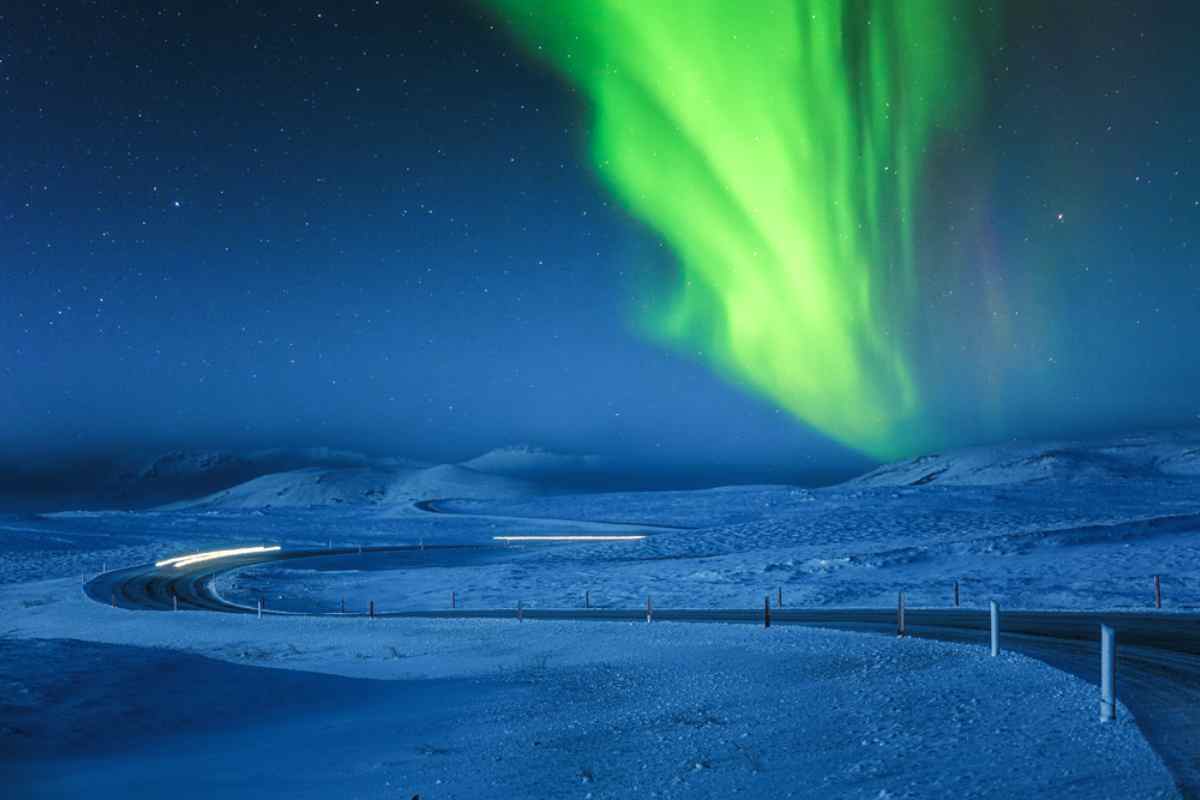
September still offers many of the summer perks, with another added benefit: you can already expect fewer midges at Lake Myvatn! If you really want to take on the Diamond Circle during our winter months, chasing down the Northern Lights, please ensure that you’re well prepared.
This means realistic expectations, a 4x4 campervan with all the necessary winter gear and accessories, sufficient rental insurance coverage, and a steady hand on the steering wheel.
Driving Conditions and Safety Tips
You’ll be glad to know that at least 90% of the Diamond Circle route is paved. It’s also country roads, where you can go 90 kilometers an hour (56 miles per hour). On the gravel roads leading to attractions, you’ll be able to cruise at 80 kilometers an hour (50 miles per hour), but with the understanding that you’ll decrease your speed based on conditions.
Whenever you enter our urban and residential areas, like in Husavik, you can expect speed limits of 30-50 kilometers an hour (19-31 miles per hour), even though it’s all paved and well-maintained roads. Our north is considered more remote, so just be sure to keep an eye out for animals unexpectedly crossing the road.
Since it is a more remote region, you’ll also find that there are fewer gas stations and longer stretches apart from one another. So, always follow the rule of thumb to top up when the gas tank is half full. Also, be sure to fill up whenever you hit one of the bigger cities or towns, such as Akureyri or Husavik.
If you’re planning on having a couple of drinks along the way, remember that Iceland has zero tolerance for drinking and driving. If you don’t want a world of trouble at your campervan door, you'd better be or get a designated driver.
Please keep a close eye on our weather forecasts via the Vedur website and also stay up to date with road conditions via the Umferdin website. Be sure to save important numbers such as the rental company, the insurance company, and the Icelandic emergency number, 112, on your phone.
FAQs About the Diamond Circle Iceland Itinerary
Below are the answers to some of our most frequently asked questions about the Diamond Circle:
How Long Does the Diamond Circle Take by Campervan?
Although the 250 kilometers (155 miles) of the Diamond Circle can be driven in 4 hours, you’ll need at least 2 to 3 days to explore the region and stop at the various attractions along the way.
Is the Diamond Circle Suitable for Campervans?
Absolutely. Most of the Diamond Circle is paved and well-maintained main roads, making it perfectly suitable for campers. If you’d like to take some extra precautions, you can always opt for a 4x4 campervan rental, giving you additional peace of mind.
Can You Drive the Diamond Circle in Winter?
You can, but it’s not advised for those not used to harsher weather elements (snow and ice), or those who consider themselves to be nervous drivers. You’ll also have to be a bit more flexible with your itinerary since you never know when there might be sudden road closures or closed attractions or activities.
When is the Best Time to Drive the Diamond Circle?
We recommend driving the Diamond Circle in the summertime (June to August) or during one of the shoulder months (May or September). This is when you’ll have the best weather, the most daylight hours, and pristine road conditions.
How Do We Deal with the Midges at Lake Myvatn?
Dealing with the midges at Lake Myvatn is pretty simple: just wear long-sleeved clothing and use insect repellent.