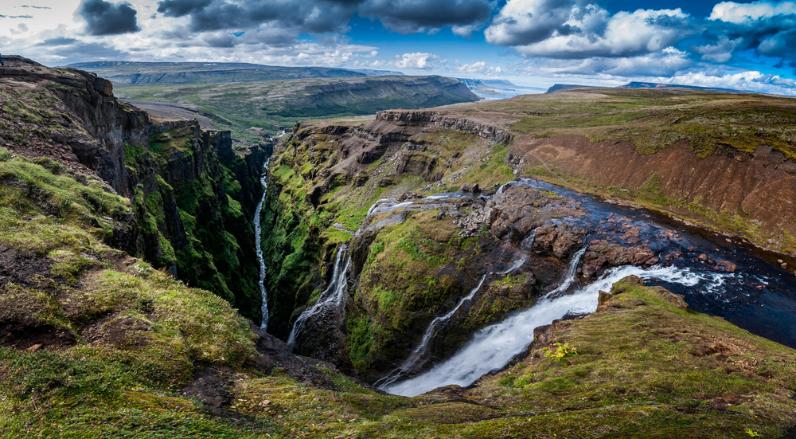
The seemingly endless nature is one of the main reasons people decide to visit Iceland. If you’re interested in hiking in Iceland, you’ll find no shortage of fantastic trails suitable for all fitness and skill levels. The key to completing the best hikes in Iceland is to be fully prepared for the experience. Whether you’re renting a campervan or booking public transportation, you’ll find fantastic hiking options to enhance your experience.
Below, we’ll share the best hikes to consider during your stay, whether you’re looking for a short day hike or a longer multi-day hike. In addition, we’ll go over the Iceland hiking safety and much more to give you an amazing experience.
Why Go Hiking in Iceland?
Why do people come to Iceland to go hiking? The island country is a treasure trove of trails and hiking opportunities perfect for all types of nature lovers. If you’re wondering why Iceland trekking should be at the top of the list, here are the top reasons to consider it:
Unique Landscapes and Experiences
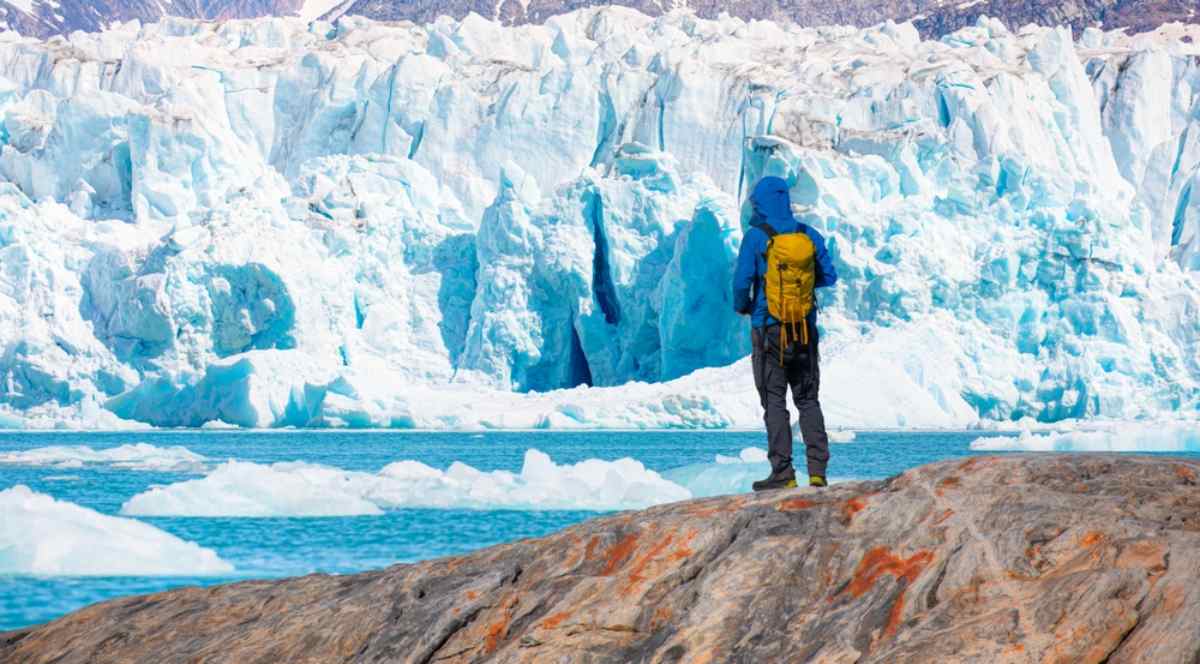
Hiking in Iceland is almost like stepping into another world. The raw beauty of Icelandic landscapes is unmatched and makes trekking in Iceland a unique experience you can’t get anywhere else. You’ll traverse volcanic landscapes dotted with moss, seeing mountains, waterfalls, glaciers, and so much more. For such a small country, it truly offers so much.
Best Seasons for Hiking in Iceland
The next big question to answer is when you should consider hiking in Iceland. In general, the absolute best time to hike in Iceland is in the summer (June-September) when the trails are relatively dry and clear. However, that doesn’t mean it’s the only time. The shoulder seasons, such as late May and early October, can also be great times to hike with fewer crowds.
Who Can Hike in Iceland?
The makeup of your party doesn’t necessarily determine whether you can hike at all. Due to the many trails you can find around the country, there are hikes suitable for everyone. Some hikes can be easily done by the entire family or beginners, while others are limited to more advanced hikers and everything in between. Be sure to research carefully to determine which trails are suitable for your group’s fitness level and preferences.
Best Day Hikes in Iceland
Not everyone is able or willing to go on multi-day hikes through the Icelandic wilderness. However, that doesn’t mean you can’t enjoy some breathtaking scenery on some day hikes in Iceland. Below, we’ll explore the best ones to consider, whether you’re a beginner or looking for something a bit more advanced.
Glymur Waterfall Hike
Glymur is the second-tallest waterfall in Iceland and is conveniently located close to Reykjavík, making it a perfect day hike in Iceland. However, it’s important to keep in mind that this trail is a bit more challenging than some others. It involves two river crossings (one bridged by a log in the summer) and some somewhat steep climbs near cliffs.
Trail Facts
|
Distance |
7 km loop |
|
Duration |
3-4 hours (times vary depending on fitness level) |
|
Difficulty |
Moderate |
|
Season |
Late spring to early autumn |
|
Notes |
The log bridge is only present in summer |
Highlights and Tips
The hike to Glymur starts as an easy gravel path, leading to the river with a cave-like opening that beautifully frames the canyon. As you continue along the trail, you will encounter a log bridge (in the appropriate season) to safely cross the river to begin the second part of the hike.
The hike on the east side of the river is steeper, but it offers panoramic views of the canyon, along with the 198-meter waterfall. It is recommended to hike up the east side and down the west side to ensure the best views of the waterfall. However, keep in mind that the upper river crossing is unbridged. You will either need good waterproof shoes or remove your shoes for the crossing, so pack a towel.
Mount Esja (Near Reykjavík)
Moust Esja is the big mountain just across the fjord north of Reykjavík. It’s clearly visible from the city and a favorite hike for those who live in the area, along with visitors. In fact, you’re likely to encounter locals hiking this mountain before or after work or on weekends due to its proximity to the city.
There are several trail options on Mount Esja, each offering breathtaking views of the city and its surroundings. On clear days, you can even see the Snæfellsnes Peninsula. As you complete this hike, remember that the wind can be fierce here and the trail may be icy, even in the shoulder seasons.
Trail Facts
|
Distance |
6-7 km loop for the Steinn route 10-11 km loop to the summit |
|
Duration |
2-3 hours for Steinn 3-4.5 hours for the summit |
|
Difficulty |
Moderate to Steinn Moderate-hard to the summit |
|
Season |
May-October, but it is possible year-round |
|
Notes |
Snow and ice is common in winter |
Reykjadalur Hot Springs Trail
Just outside Hveragerði, you’ll find the Reykjadalur hot springs trail, a comfortable trail that winds through geothermal terrain where the ground is steaming. It’s a surreal experience that leads you to a geothermally heated river where you can relax and enjoy a natural hot spring experience.
Keep in mind that the river has varying temperatures, so test the water carefully before choosing your spot. You should be mindful to stay on the trails to avoid breaking through the thin crust with excessively hot water below. Wooden boardwalks are installed to help keep you safe.
Trail Facts
|
Distance |
7 km round trip |
|
Duration |
2-3 hours |
|
Difficulty |
Easy-moderate |
|
Season |
May-October, but accessible year-round |
|
Notes |
Winter can be icy and windy |
Arnarstapi to Hellnar Coastal Path (Snæfellsnes Peninsula)
If you’re looking for a relatively easy day hike on the Snæfellsnes Peninsula, the coastal path between Arnarstapi and Hellnar is an excellent choice. You’ll stroll along dramatic cliffs with very little elevation gain, making it a perfect walk for families with young children or individuals with low fitness levels. You’ll see ancient lava formations, the Gatklettur rock arch, seabird colonies, and more as you make your way along the coast.
It’s important to note that the path is a bit rocky and may not be even, so it’s best to wear sturdy hiking boots or shoes with good support. It is also a one-way path, so you will either need to plan for someone to drive to the other end or walk back.
Trail Facts
|
Distance |
2.5 km one way |
|
Duration |
45 minutes - 1 hour each way |
|
Difficulty |
Easy |
|
Season |
Year-round |
|
Notes |
Can be windy. Ice possible in winter. |
Multi-Day Treks in Iceland
If you have a higher level of fitness or prefer an adventure that takes you off the beaten path, there are Iceland trails that will take you several days to complete. These treks take you into the wilderness and away from civilization, immersing yourself in the unique nature of Iceland that few other visitors get to see. Here are a few of the most popular multi-day treks.
The Laugavegur Trail (Landmannalaugar to Þórsmörk)
The Laugavegur hike is probably the most publicized of the multi-day hiking options in Iceland. It’s a trail that many long-distance hikers have on their “must-do” list due to its isolation and unbelievable views. However, it’s one that you must be prepared to tackle, carrying everything you need in and out and staying in huts or camping along the way.
The Laugavegur trail is a 55-kilometer hike over various terrain, including the following:
- Rhyolite mountains
- Obsidian lava fields
- Snowy patches (year-round)
- Black sand deserts
- Volcanic canyons
- The birch forests of Þórsmörk
Hiking this trail takes about four days, with several heated huts dotted along the way. These huts must be booked well in advance and include cooking facilities to save money. Camping is also available in designated sites. Bus transportation is available at both ends of the trail during the summer season. If you hike the trail in other seasons, you will need to arrange for private transport.
Be sure to pack for all conditions because the weather can change quickly. Water shoes are useful for crossing streams.

Trail Facts
|
Distance |
55 km one way |
|
Duration |
3-4 days |
|
Difficulty |
Moderate-challenging |
|
Season |
Late June-early September |
|
Notes |
Snowy conditions make this a mountaineering route |
The Fimmvörðuháls Trek (Skógafoss to Þórsmörk)
The Fimmvörðuháls trail extends between Skógafoss on the South Coast and Þórsmörk in the highlands, covering 22 kilometers. You will hike between the Eyjafjallajökull and Mýrdalsjökull glaciers, so you will need to be prepared with warm clothing throughout the year.
Hiking the Fimmvörðuháls trail includes beautiful views throughout, split between three primary sections. The first section includes climbing the staircase at Skógafoss and following the Skógá River past 25-30 additional waterfalls. You then journey between the glaciers through lava fields created during the 2010 eruption, along with two volcanic craters. The final third covers the descent into Þórsmörk.]
Þórsmörk has huts and a campground, so you can stay the night after your long trek. Otherwise, you can book the bus back to the other side in the summer months. Either way, be sure to start the hike early to ensure you have plenty of time to finish.
Trail Facts
|
Distance |
22-25 km (depending on the route) |
|
Duration |
8-12 hours |
|
Difficulty |
Challengin |
|
Season |
July-early September |
|
Notes |
Snow lingers longer. Weather is variable between the glaciers |
Combining Laugavegur and Fimmvörðuháls into One Epic Trek
More adventurous travelers can take these multi-day treks to another level by combining the two into one long four to six-day hike that covers about 75 kilometers of the most diverse landscapes. You’ll get all the benefits of both hikes with dramatic glaciers, all the variety of the Laugavegur landscape, and the green oasis of Þórsmörk.
If you’re planning to do this long hike, you’ll need to book the huts months ahead of time when booking opens for the year, unless you plan to camp. You will need to carry all of your supplies or schedule supply drops at one or several of the huts along the way. Be sure to plan for all types of weather, along with associated delays that can happen.
Seasonal & Highland Hiking Adventures
The season in which you travel will dictate which of the Iceland trails are available. For instance, if you want the highest chance of hiking as many trails as possible, visiting in the summer is the best option. Be sure to monitor conditions because seasonal hikes are often still closed in spring due to muddy conditions to protect the environment.
Landmannalaugar Hiking Area
A Landmannalaugar hike is a great option if you’re looking for a beautiful, diverse hike in the heart of the Icelandic highlands. It’s relatively easy to get to the area with a 4x4 rental, with no river crossings when approaching from the northern route. With numerous trails, you can complete a short hike that takes a couple of hours or stay in the campground and hike trails for days, never seeing the same area twice.
The colorful geothermal landscape is the biggest attraction to Landmannalaugar. As you hike, you’ll experience orange, yellow, red, and blue mountains, making it one of the most colorful hikes.
Trail Facts
There are several hiking routes in Landmannalaugur. Below is the range you can expect from these trails:
|
Distance |
4-9 km |
|
Duration |
1-4 hours |
|
Difficulty |
Easy-moderate |
|
Season |
Late June-September |
|
Notes |
Numerous routes to choose from. |
Highland Access and F-Roads – What Hikers Need to Know
The highlands are generally open from about mid-June until mid to late September each year, depending on the weather conditions. However, it opens up a world of hiking opportunities you can’t get at other times of the year. Keep in mind that you will need to rent an F-road-capable 4x4, whether a campervan or an SUV, to get there.
Some of the hikes you may want to consider for your highland trip include:
- Askja Caldera & Víti Crater
- Kerlingarfjöll Mountain Range
- Hveradalir Geothermal Valley
- Hekla Summit
Some of these hikes can be done yourself, while others, particularly Hekla, require a guide for safety reasons.
Hiking in Iceland in Winter – Is It Possible?
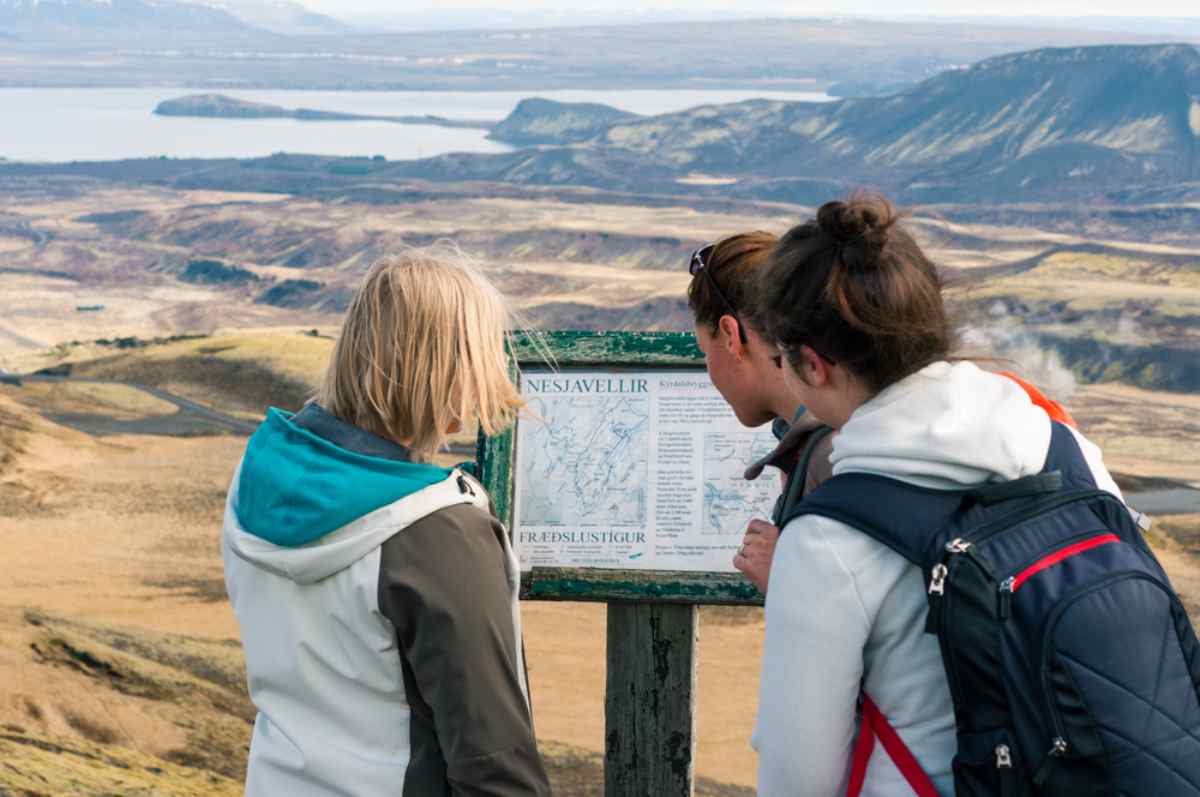
Yes, hiking in Iceland in winter is possible, but you will be more limited in which trails you can use, and you must prepare well for the hike. Microspikes or crampons may be necessary to traverse slippery surfaces. You will need to dress in layers, bring a headlamp, and use Iceland hiking maps to avoid losing your way. Hiring a guide can also be useful for winter hiking.
Hiking Safety in Iceland
No matter when you go hiking in Iceland, there are certain safety measures you should take. This is especially true if you’re using more moderate trails or taking multi-day routes. The following will help you stay safe on the trails.
Weather and Trail Conditions (And Why They Change Fast)
Iceland’s weather can be volatile and change quickly. After all, Icelanders often say, “If you don’t like the weather, wait 5 minutes.” You may start your hike in the sunshine and suddenly find yourself in a whiteout blizzard, foggy conditions, or a downpour. The wind can also pick up out of nowhere.
First and foremost, be sure to check the weather conditions before you start your hike. Once you are sure the hiking conditions are suitable, make sure you are prepared for anything Mother Nature may throw your way during the trip.
Registering Your Hike With SafeTravel.is
SafeTravel.is is your top resource for staying safe during your Iceland trip. In addition to providing information on weather warnings and road closures, this website offers the ability to report your travel plans to the authorities. After registering your hike, you must check in to let them know you have completed the hike. If they don’t hear from you at the designated time, they will launch rescue efforts.
Driving and Parking at Trailheads
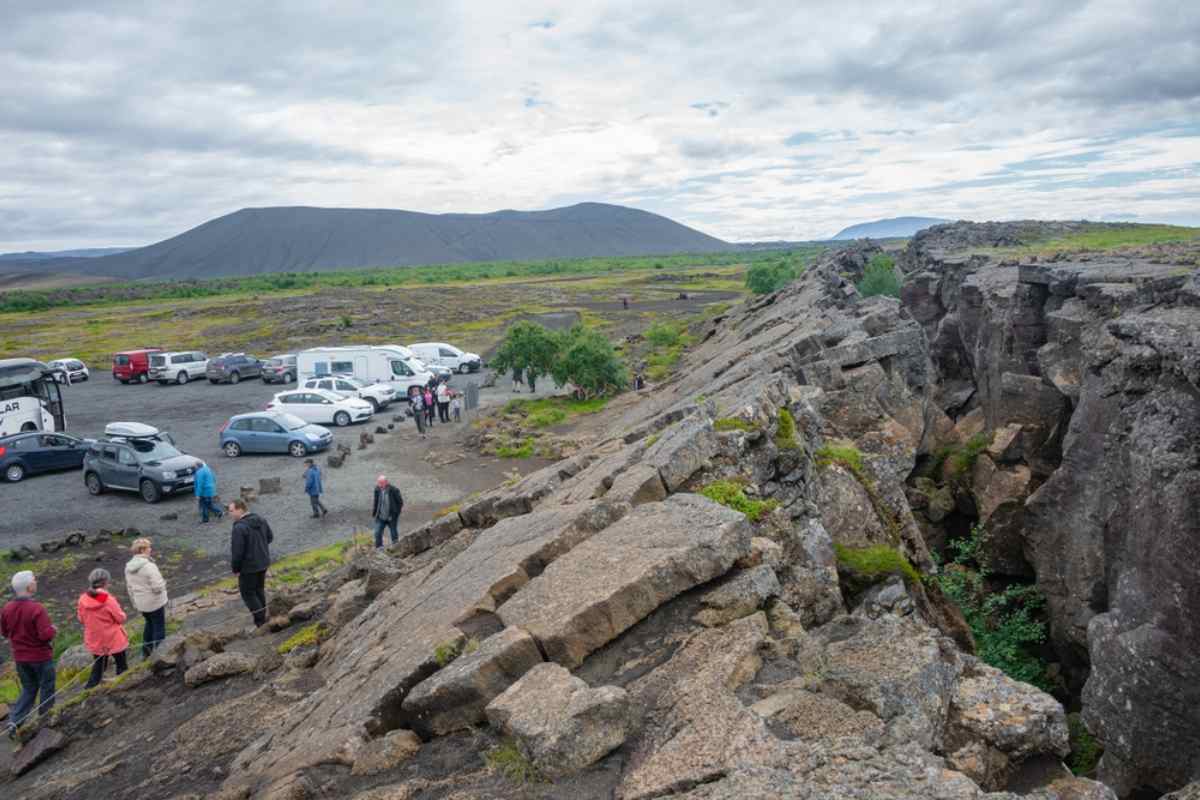
Always make sure you are parking in marked parking lots at the trailheads instead of parking in random locations. Most hikes have a parking lot you can use, but make sure you are aware of the costs and pay accordingly. Make sure you check road conditions and whether you need a high-clearance vehicle to reach a trailhead.
Respecting Nature
Finally, and perhaps most importantly, respect nature and leave it as you found it for those who will come after you. Always stay on marked trails and pack out whatever you take with you. The Icelandic moss is extremely sensitive, so don’t step on or otherwise disturb it. It can take years, even decades, to grow back.
If you rent a campervan or plan to camp in a tent, remember that you are required to stay in a designated campground. The longer trails generally have their own campgrounds, while other trails will require you to find one nearby. If you’re traveling in summer, you’ll have plenty of options, but the offseason will require a little more planning to find open campgrounds.
What to Pack for Hiking in Iceland
Planning what to pack for a hike can be challenging, especially in Iceland. You want to have everything you need, but you also must minimize how much you carry as much as possible to prevent unnecessary fatigue. Here’s what you need:
Clothing Layers for Different Seasons
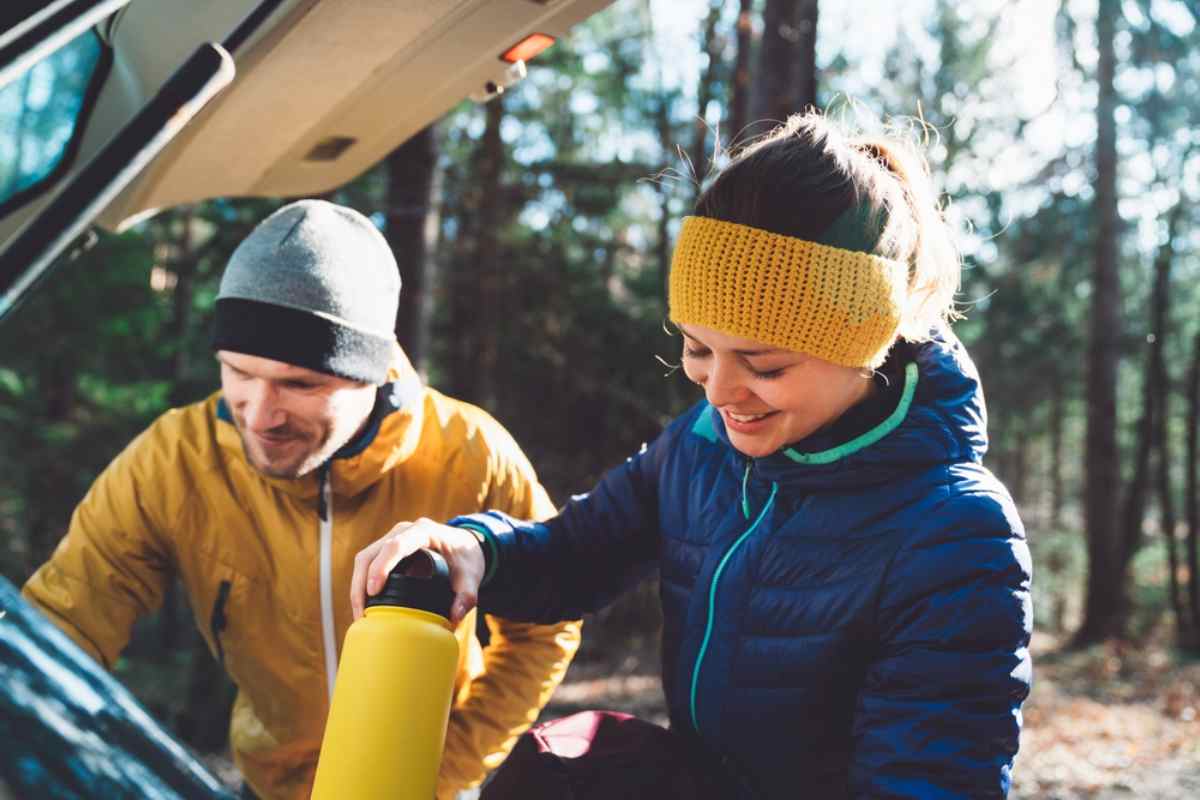
Layers are key, whatever you do in Iceland. As you plan your clothing for the hike, consider the following:
- A base layer (thermal in the colder months)
- An insulating middle layer (typically fleece or wool)
- A waterproof outer shell
- Hat and gloves (all year-round, even in summer)
Essential Hiking Gear
Beyond your typical clothing layers, you will need gear specific to hiking, including the following:
- Waterproof hiking boots with good tread and ankle support
- Trekking poles
- Microspikes or crampons for the winter or shoulder seasons
- GPS or offline navigation tools
- Gaiters for muddy or snowy conditions
Food and Water Planning
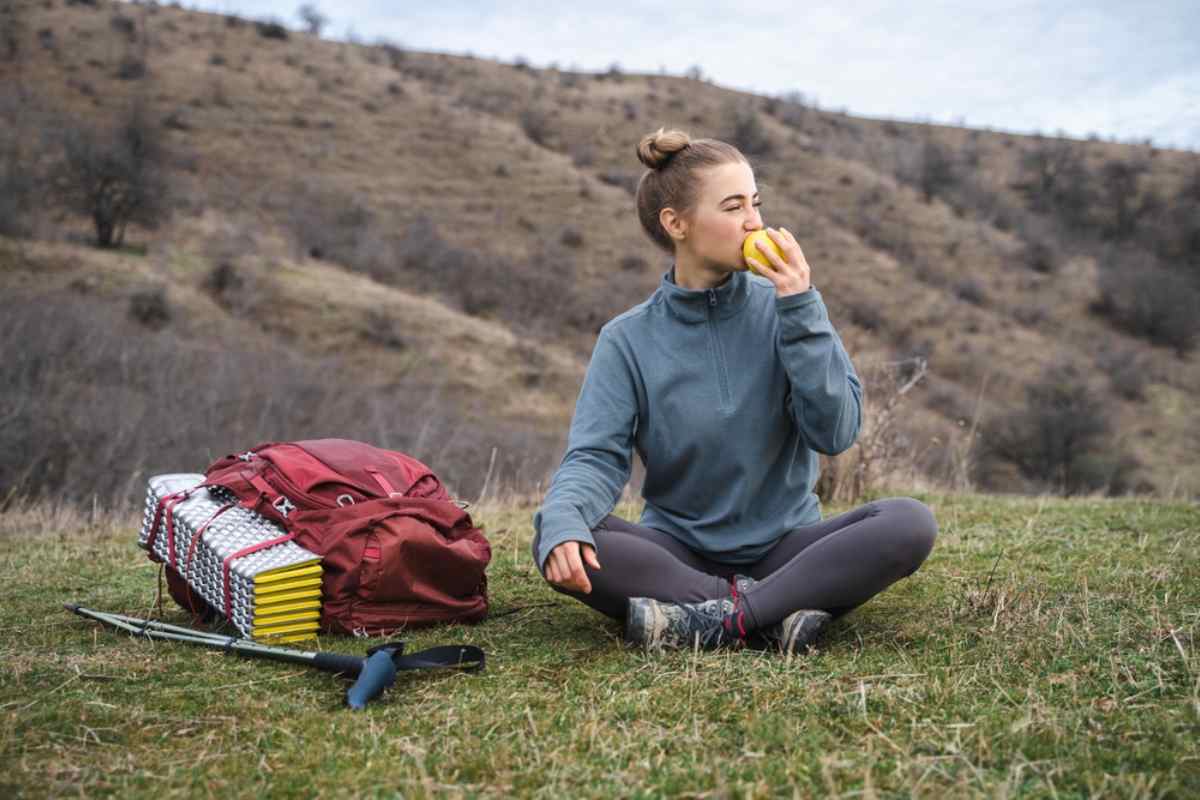
Shorter hikes won’t require much planning for food and water, but you should always have a full water bottle and some protein-rich snacks along for your hikes. If you come across any clear, flowing streams, you can always refill your water bottle there.
However, if you are planning longer hikes or multi-day treks, you will need to plan a bit more carefully. As mentioned, you can refill your water bottle in most streams, but you may want to bring a filter. When choosing food for your journey, pack calorie-dense meals, such as dehydrated hiking meals. If you have a lightweight camping stove and don’t plan to stay in huts, you can bring that as well.
Emergency Items
Finally, there are some emergency items you should bring on your hikes. Here are some of the most important items:
- A well-stocked first aid kit
- A power bank and charging cables
- Extra batteries for your GPS and headlamp
- An emergency blanket
- A whistle
Top Tips for Planning Your Hiking Trip
Hiking in Iceland requires careful planning to ensure you have the experience you want and don’t feel like you forgot anything. The following tips will help you finalize your hiking plans before your trip.
Guided Tours vs. Independent Hikes
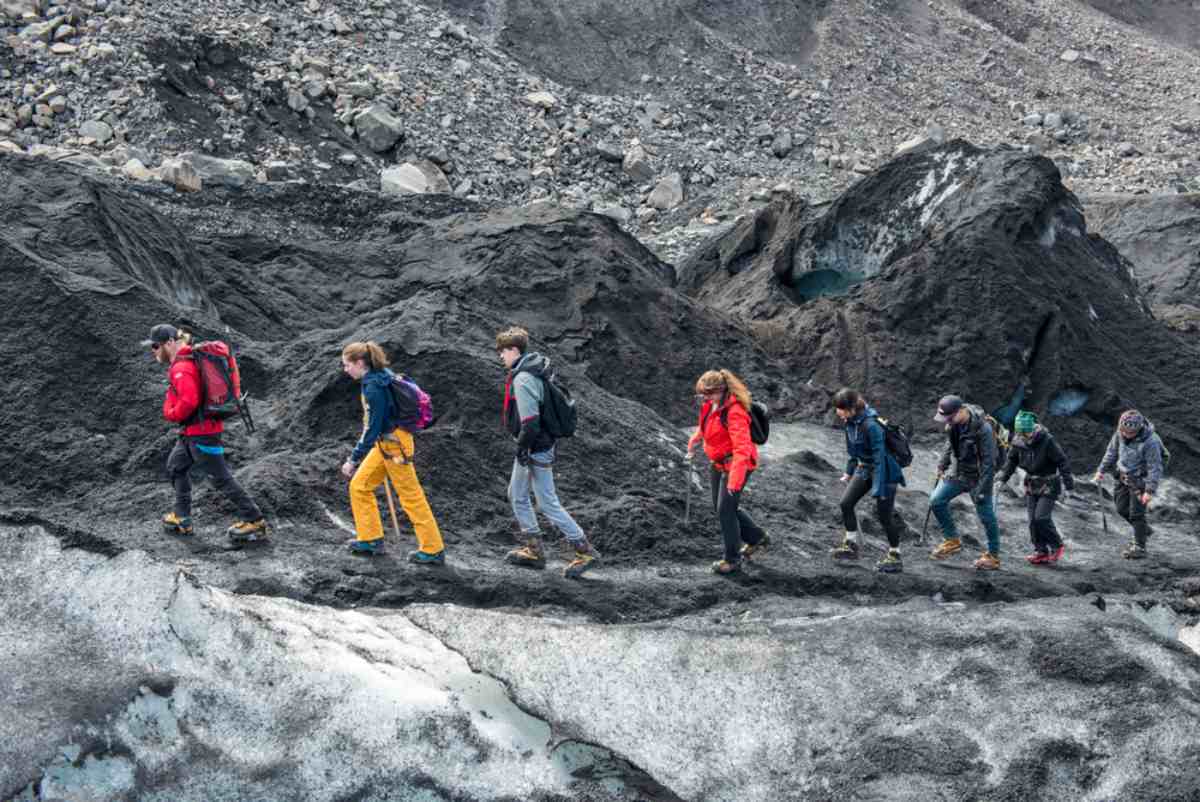
Many nature lovers prefer to commune with nature on their own without worrying about hiring a guide. These independent hikes are available in Iceland as long as you take the appropriate safety precautions and hike in the appropriate season for each trail. Hiking independently gives you the most flexibility and freedom in your plans.
However, if you’re planning to tackle the longer, multi-day treks or want to hike in winter, it’s often best to work with an experienced guide. They know the area well and will guarantee you’re well prepared for the journey and stay safe.
Best Apps and Maps for Iceland Hiking
Before heading out on any hike, there are some apps you should have downloaded on your smartphone. Some of them will require an Internet signal, but others are available offline.
- SafeTravel.is for alerts
- Vedur.is for weather conditions
- Maps.me or AllTrails for offline maps (download the maps you will need ahead of time)
- Umferdin.is for road conditions
Budgeting: Costs of Hiking, Huts, and Camping
The beauty of hiking in Iceland is that it doesn’t cost you a thing to hike. There are no entry fees to these locations, but you may have to pay for parking (around $8 USD or 7 Euro), and reserving the huts or campgrounds will also have a fee.
- Huts can cost between $65-$122 USD (56-105 Euro) per night
- Campgrounds generally cost around $25 USD (22 Euro) per person per night
- The highland bus can cost around $110 USD (95 Euro) per person
Other costs to consider include your car rental and fuel if you are self-driving, and the price of guided tours or gear rentals if needed.
Hiking in Iceland – FAQs
Do you still have questions about hiking in Iceland? Here are answers to some of the most commonly asked questions we hear:
Do I need a guide for the Laugavegur Trail?
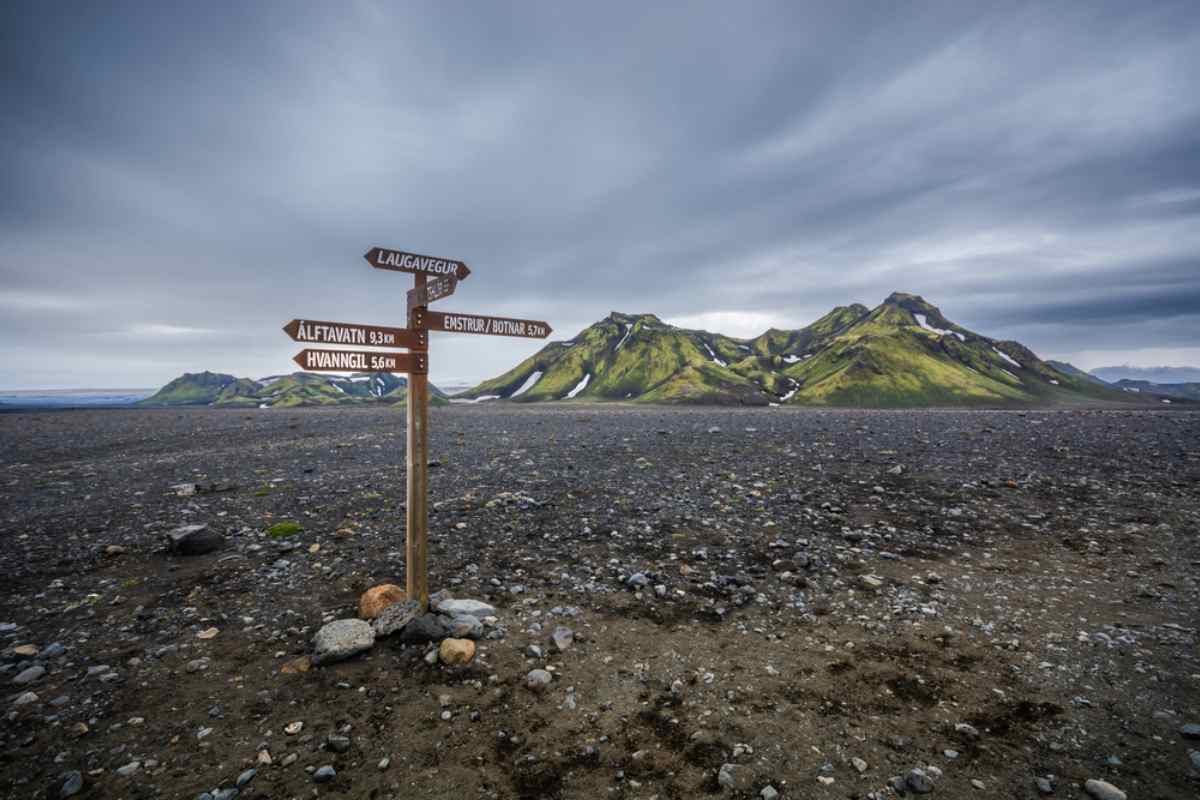
Not necessarily. If you’re an experienced hiker and have already booked the huts or have appropriate camping gear, you can hike the Laugavegur trail yourself. However, we recommend hiring a guide if you’re inexperienced with multi-day hikes or are worried about the conditions.
Can I hike in Iceland with kids?
Certainly! While some hikes are moderate or challenging and not suitable for young children, there are plenty of easy, family-friendly hikes in Iceland.
Are dogs allowed on Icelandic hiking trails?
Yes, dogs are welcome on most hiking trails in Iceland, but they must be on a leash at all times. Nature reserves may have restrictions on dogs. Keep in mind that bringing a dog into the country as a tourist generally isn’t allowed.
What’s the best time of year to hike in Iceland?
The summer is typically the best time to hike in Iceland due to better weather conditions and accessibility. June through September is the peak hiking season, with July and August having more stable weather.
Can you hike during winter in Iceland?
The answer depends on which route you are considering. Some hikes aren’t accessible in the winter, but you can still find plenty of options. Be prepared to hire a guide or invest in proper winter gear.
Final Thoughts: Making the Most of Hiking in Iceland
Iceland hiking and camping trips can be a great way to see the country and immerse yourself in nature. Whether you’re considering a short day hike to see some waterfalls or want to trek through volcanic deserts on a multi-day journey, you’ll find unforgettable hiking experiences waiting for you in Iceland.
Whether you’re renting a campervan in Iceland, self-driving with a regular car, or booking tours, you’re sure to find that the island is a hiker’s dream. With so many options, you’re sure to find one that suits your interests and fitness level. Start planning your hiking adventure today!