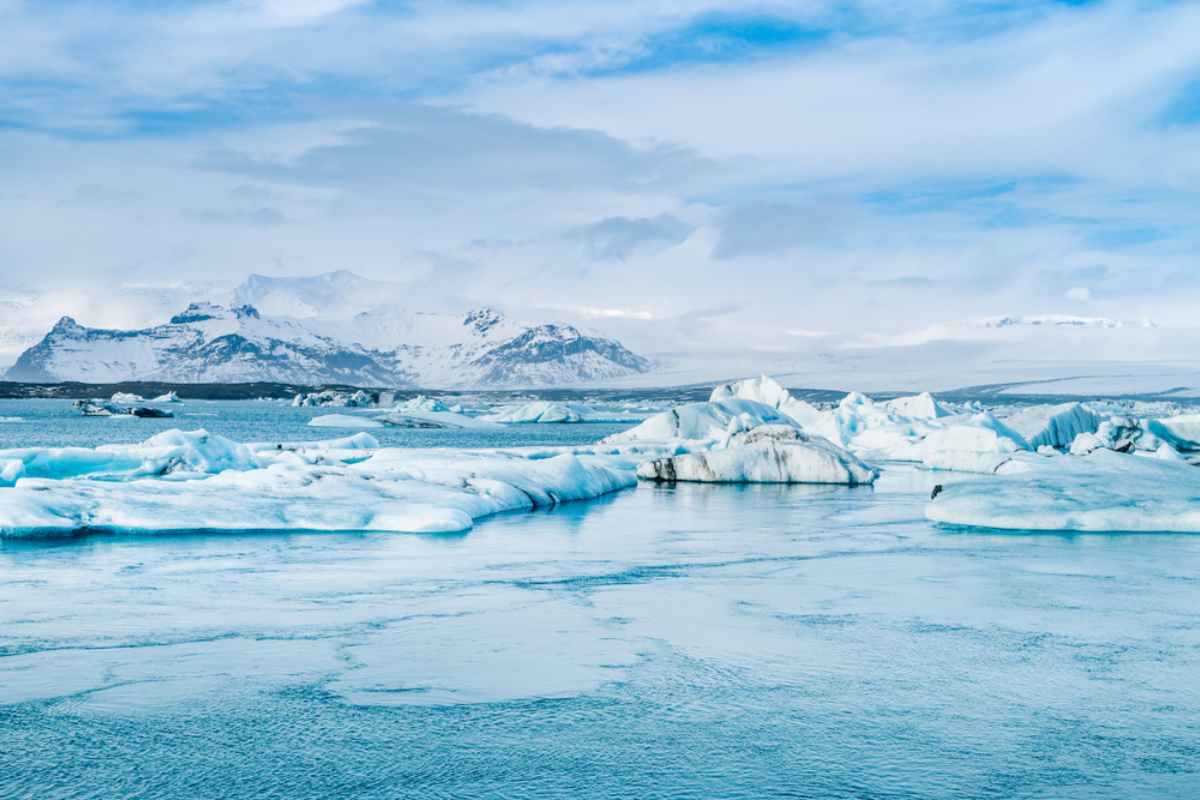
Looking for where to stay near Jokulsarlon Glacier Lagoon with a campervan or motorhome? Here's the truth. You don’t sleep at Jokulsarlon. You only stop here, stare, take some photos, and move on.
At Motorhome Iceland, we’ve seen too many people caught off guard. This guide isn’t about icebergs. It’s about where to crash nearby, legally. We’ll break down all of the nearby campsites, how far they are, and what facilities you can expect.
Remember that Jokulsarlon isn’t a town, it’s a waypoint on the Ring Road. Keep on reading to find out what you need to know before you go.
Why Jokulsarlon Is a Must-Stop on an Iceland Camper Road Trip
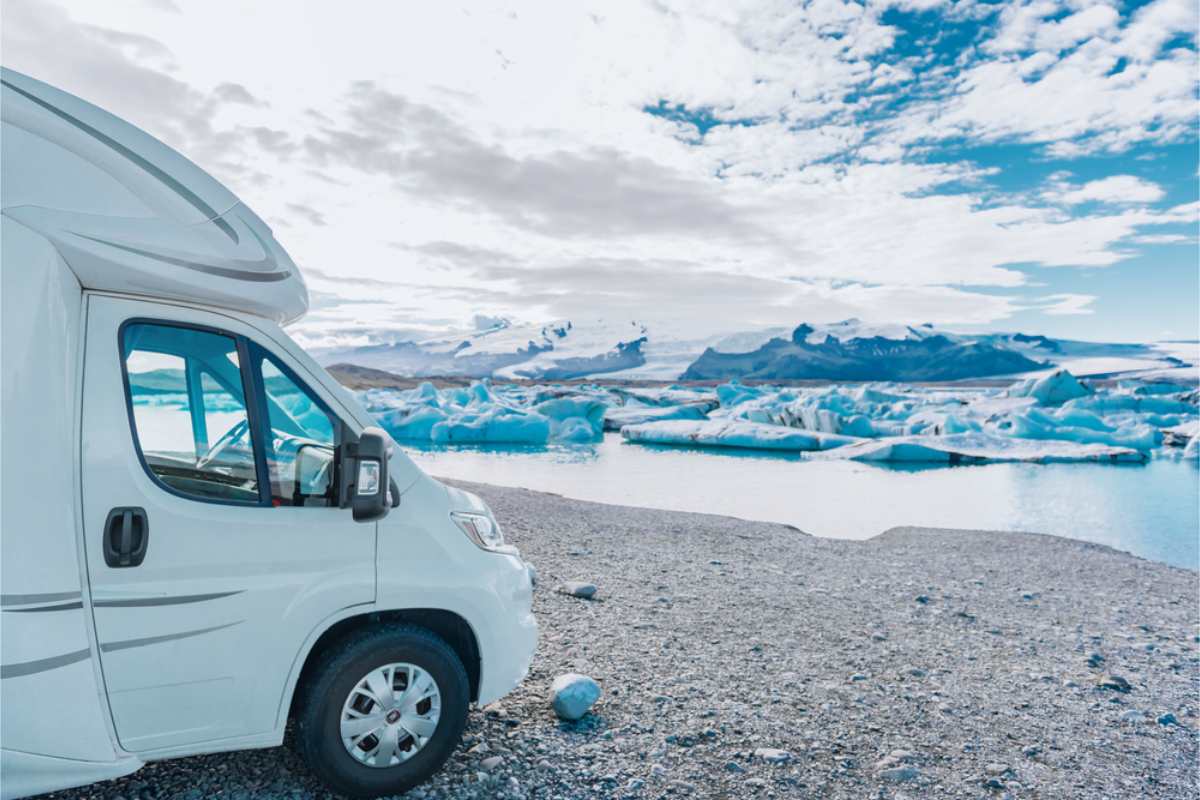
When you rent a campervan in Iceland, then Jökulsárlón Glacier Lagoon is one of those must-visit places. It’s situated right on the Ring Road, about 380 km (236 mi) from Reykjavík. It’s very simple to reach, easy to visit, and impossible to skip if you’re driving in Iceland in a campervan.
There’s a large parking area that handles motorhomes without issue. You’ll also find toilets on-site. You’ll need to fork out around 1,000 ISK for parking. The roads are paved all the way. Just watch the conditions in winter.
It’s a natural break between Vík and Höfn, especially if you’re pacing your trip around real stops, not just sleep spots. The lagoon is steps from the lot, so there’s no long hike to get there either. You pull up, take it in, and move on.
Timing matters. Early morning and late evening visits beat the bus crowds. Summer gives you light all night. Winter might throw in the northern lights. Either way, campers have the upper hand here.
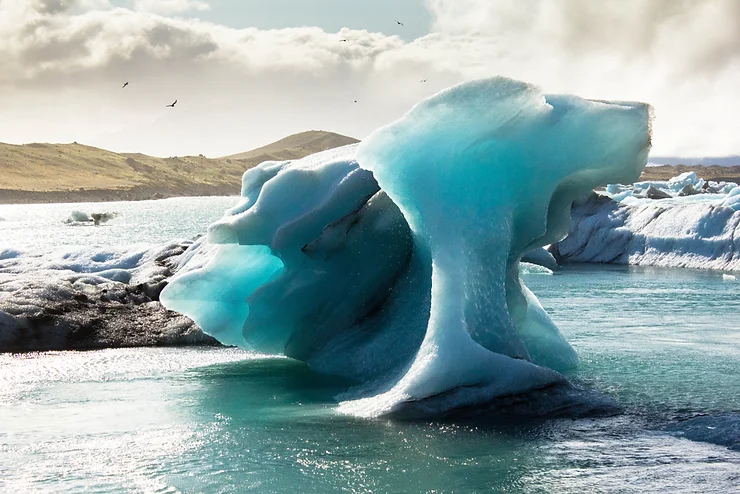
Can You Camp at Jokulsarlon Glacier Lagoon?
No, you cannot camp at Jökulsárlón Glacier Lagoon. It’s part of Vatnajökull National Park, and Icelandic law doesn’t mess around with protected areas. The parking lot is for visitors during the day, not overnight stays. There are officials that check regularly, and fines aren’t cheap.
Still think sleeping in your vehicle is just ‘parking’? Doesn’t matter. In Iceland, that’s classified as camping if you’re staying overnight. And since this is public conservation land, there’s no private landowner to grant you special permission.
If you’re looking for where to stay near Jökulsárlón Glacier Lagoon, you’ll need to drive a bit. Fortunately, the Ring Road has legal campsites in both directions. They come with toilets, waste stations, and space for campervans.
Best Campsites Near Jokulsarlon Glacier Lagoon
You won’t find a campsite right next to the lagoon, but there are a couple of options in both directions along the Ring Road. If you're deciding where to camp near Jokulsarlon Glacier Lagoon, here’s where we recommend:
Skaftafell Campground
Skaftafell Campground is one of the most camper-friendly stops in southeast Iceland. Located 55 km (34 mi) west of Jokulsarlon Glacier Lagoon, it works well as a base before or after your visit.
The site is flat, structured, and built for volume. Zones A through D allow motorhomes to drive in and hook up directly. There’s power, toilets, hot showers, and nearly 400 total pitches. First-time campers will find the setup painless.
The grounds are split into eight zones, with some areas reserved for tents only. Summer gets busy with hikers and families. Expect lines for showers. Off-season stays are quieter.
Svinafell Campground
Svinafell Campground is a quieter pick for those looking at where to stay near Jokulsarlon Glacier Lagoon. Located around 50 km (31 mi) west of the lagoon, it’s a more laid-back stop than nearby Skaftafell.
For campervans, the main option is a large open field beside the Campers Service Building. The terrain is grassy and uneven, better suited to smaller vans than larger motorhomes, especially in wet weather. Facilities include toilets, showers, minimal cooking equipment, and a shared dining room that seats up to 90 people.
Everything is within short walking distance, with water and restrooms about 100 meters (328 ft) from most pitches. Guests in campers get full access to the Campers Service Building. The site is basic but quiet, ideal if you want fewer crowds and don’t need hookups or structured parking.
Höfn Campground
Höfn Campground is a town-based stop about 80 km (50 mi) east of Jokulsarlon, well-suited for campervan travelers heading into the remote east. It works as a resupply point before tackling the long stretch toward Egilsstaðir.
Supermarkets like Krónan, fuel stations, and restaurants are all within walking distance. There’s also a swimming pool and a golf course nearby if you want a break from the road. Electricity, showers, and WiFi are available on-site, which is a luxury after nights spent at more basic spots. Höfn is not a nature escape.
Haukafell Campground
Haukafell Campground is a quiet inland option for those deciding where to camp near Jokulsarlon Glacier Lagoon. It sits about 30 km (19 mi) east of Höfn and offers a slower, more local feel near Fláajökull Glacier.
This site is small and low-traffic, often missed by tourists but well-known among Icelanders. The area is surrounded by forest and walking trails. Electricity is now available for campervans, along with newly expanded toilets and showers.
Access requires a short gravel road off Route 1, fine for standard vehicles if you take it slow.
Vik Campsite (If Driving Back South)
Vik Campsite sits roughly 200 km (124 mi) west of Jokulsarlon and becomes useful if you’re looping back south. It’s just 1 km (0.6 mi) from the village center and fits up to 250 guests across tents, cabins, campervans, and caravans. You also don’t have to reserve a spot ahead of time, either. There are 36 electric hookups and a dedicated station to empty camper toilets.
Washing machines and dryers are available, with other town services a short walk away. The drive from Höfn takes 4 to 5 hours, depending on stops. Vik works well if the weather shifts your route or you need one last full-service stop before Reykjavík.
How Far Are These Campsites from Jokulsarlon?
Distances in Iceland don’t tell the full story. A site might be 50 km away, but wind, single-lane bridges, and sudden weather shifts can turn that into a 90-minute drive. Don’t trust Google Maps to guess your ETA. Use it as a rough outline, not a guarantee.
West of Jokulsarlon:
- Skaftafell - About 45 minutes in clear conditions. Add time for photo stops or tour buses.
- Svinafell - Around 40 minutes, but slower in wet weather due to the road surface.
- Vik - 2.5 to 3 hours. A full driving day, not a casual detour.
East of Jokulsarlon:
- Haukafell - Roughly 50 minutes. Gravel side road adds caution time.
- Höfn - Just over 30 minutes, depending on conditions and stops.
Expect longer drives in winter, with snow, ice, or wind slowing everything down. Leave room in your plan for delays
Facilities to Expect When Camping Near Jokulsarlon
Campsites near Jokulsarlon are practical. You’ll get the basics, but it’s not five-star camping. Before you pull in for the night, here’s what to expect in terms of comfort, power, and space:
Toilets, Showers, and Electricity
Most campsites near Jokulsarlon offer toilets, showers, and electricity, but not all in one place and not always when you need them. Toilets are always available and usually free. Showers? Not guaranteed in winter and often costs extra.
Expect to pay 500 to 1,000 ISK for a few minutes of hot water, using coins, tokens, or honesty boxes. Carry change. Electricity is hit or miss. Motorhomes can plug in at bigger sites like Skaftafell or Höfn, usually for 1,000 to 1,500 ISK per night. Smaller vans tend to go without. Don’t assume there are hookups. Know what your setup needs before you stop.

Suitability for Campervans and Motorhomes
Most southeast campsites sit on grass or gravel. Flat, paved spots are rare outside places like Höfn. At Skaftafell or Svinafell, even subtle slopes will mess with your fridge or your back unless you level out properly.
Bring blocks. Gravel drains better at Haukafell, but you’ll still need to adjust. In peak season, larger motorhomes get squeezed. Skaftafell and Höfn limit pitches to 6 to 8 meters, so anything over 10 meters risks overflow zones or tight turns. Svinafell has more breathing room but less space to maneuver.
Driving a 9-meter rig? Stick to big grounds with wide bays and proper power. Haukafell won’t cut it. And if you’re in a 4x4, it won’t save you here. You still park where you’re told, and you still need to level and follow the rules.
Jokulsarlon as Part of a Ring Road Camper Itinerary
Jokulsarlon falls right into place around Day 3 or 4 of a standard 7 to 10 day Ring Road itinerary. Most travelers move west to east, starting in Reykjavík, then pacing through the Golden Circle and South Coast. After Vík, Jokulsarlon becomes the next big stop before pushing into the Eastfjords.
Coming from Vík takes 5 to 6 hours with breaks. Leave early, hit the lagoon in the afternoon, and drive into a nearby campsite by evening. Most sleep near Vík or Skaftafell the night before. After Jokulsarlon, options like Svinafell or Höfn work well for recovery before the next long drive.
This layout avoids backtracking, balances daily drive time, and gives you flexibility if weather stalls things. You don’t need to rush it. Campsites, fuel stops, and glacier views all land in the right order if you plan smart.
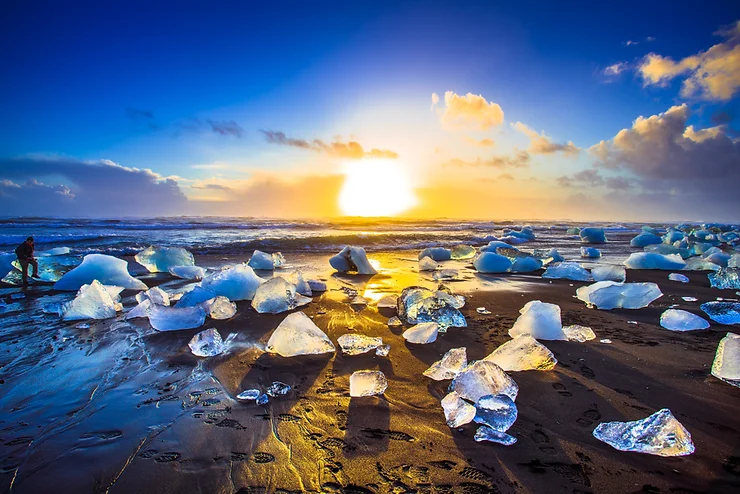
Wild Camping Rules Near Jokulsarlon (What Campervan Travelers Must Know)
As we’ve already established, Iceland’s camping rules clearly state that wild camping is illegal across the island. So, if you're still trying to figure out where to stay near Jokulsarlon Glacier Lagoon, the answer is never in a parking lot. The Nature Conservation Act bans sleeping in campervans outside marked campsites, including roadsides and public land.
Vatnajökull National Park has zero exceptions. Rangers patrol the lagoon daily. Fines start at 50,000 ISK if you're caught overnight. Barriers, cameras, and timed parking enforce strict day-use rules. Saying you were just parked or resting doesn't matter. Short roadside breaks under two hours are still legal, but anything longer becomes illegal camping.
Police may check vehicles and run breath tests. Use Tjalda to find legal campsites nearby. Expect to pay 2,000 to 4,000 ISK per person plus fees for your vehicle. It’s cheaper than a fine and less stressful than being woken up by a ranger.
Best Time of Year to Camp Near Jokulsarlon Glacier Lagoon
Campsites near Jokulsarlon Glacier Lagoon run on Icelandic terms. Most follow seasonal patterns tied to weather, road conditions, and demand. Here’s what to expect month by month.
- Summer (June to August) - Full access at Skaftafell, Höfn, and Svinafell. Midnight sun stretches your days but also packs the sites. Tour buses and hikers flood the area. Arrive early or risk being squeezed out.
- Shoulder season (April to May and September to October) - Fewer people and more space. Skaftafell stays open year-round. Rustic sites like Svinafell may close or scale back hours. Services like showers and electricity may not run full time. Cooler air, less noise, better views.
- Winter (November to March) - Options shrink fast. Skaftafell is your only reliable choice. Limited zones and basic toilets only. Snow and ice shut down smaller spots like Haukafell. You’ll need a self-contained setup and realistic expectations. This isn’t the most comfortable season.
FAQs About Staying Near Jokulsarlon with a Campervan
How late can I arrive at campsites near Jokulsarlon?
Most accept arrivals until 10 PM or later in summer. Many use self-check-in. Aim for before 7 PM during peak season to secure a spot before the crowds hit.
Do I need to book campsites in advance?
No. Most campsites near Jokulsarlon operate on a first-come basis. Arrive early in peak season to avoid getting squeezed out, especially with larger rigs.
What’s the safest campsite if storms are coming?
Skaftafell is the safest bet. It’s sheltered, well-maintained, and staffed. Avoid exposed coastal spots like Haukafell. Always check road conditions on umferdin.is before committing to long drives.
Can motorhomes fit at all nearby campsites?
Not all. Sites like Skaftafell and Höfn handle large rigs well. Svinafell and Haukafell are tighter, better for vans under 8 meters. Plan your stop accordingly.
What happens if weather forces me to stop early?
Head for the closest sheltered campsite like Skaftafell or Höfn. Skip exposed or inland sites. Don’t risk waiting it out roadside. Use Tjalda or road.is to check conditions and stay put.