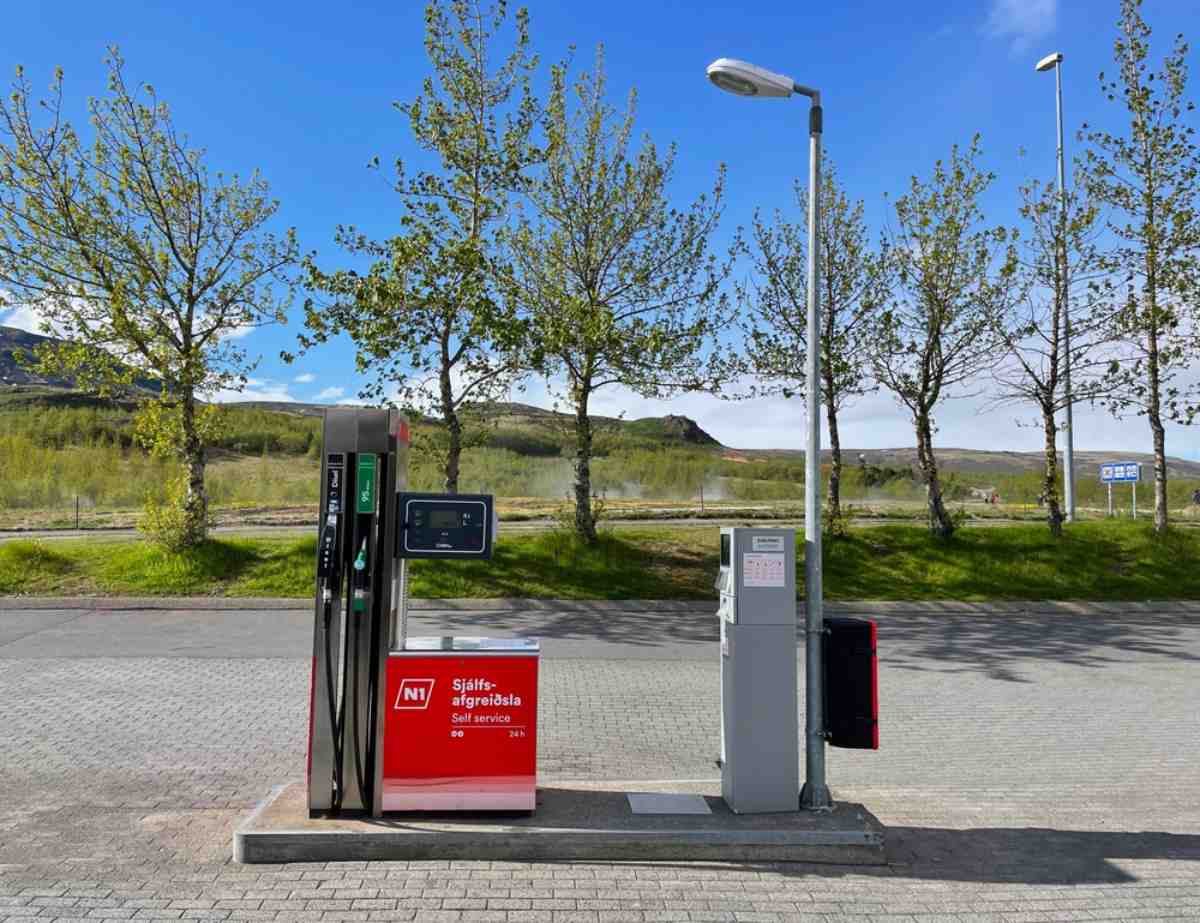
If you are planning to rent a campervan in Iceland, fuel is one of the biggest budget questions you will face. So, how much is gas in Iceland?
In June 2026, the national gasoline average is about 221.72 ISK per liter ($1.79/L), with diesel higher and capital-area pumps ranging roughly from 203 to 233 ISK ($1.64 to $1.88/L).
This guide covers what you will actually spend on a road trip, where gas is cheapest, how to pay at self-service pumps, and the mistakes that cost people money.
Gas Prices in Iceland at a Glance (June 2026)
|
Fuel Type |
National Average |
Capital Area Range |
|---|---|---|
|
Gasoline |
221.72 ISK/L ($1.79/L) |
203.3-232.9 ISK/L ($1.6-$1.88/L) |
|
Diesel |
255.64 ISK/L ($2.07/L) |
241.6-264.9 ISK/L ($1.95-$2.14/L) |
Typical Road Trip Fuel Budgets
|
Vehicle |
Ring Road (1,322 km) |
Realistic Trip (1,800 km) |
|---|---|---|
|
Compact |
20,518 ISK ($166) |
27,940 ISK ($226) |
|
Mid-size SUV |
29,311 ISK ($237) |
39,910 ISK ($322) |
|
Large Camper/4×4 |
35,174 ISK ($284) |
47,890 ISK ($387) |
What Fuel Prices Actually Mean for Campervan Travellers
If you researched this before, check the publication date. Fuel prices, VAT rules, and Iceland's new kilometer fee changed enough in 2026 to make older estimates unreliable.
The national average is a useful anchor, and Bensinverd's local tracker keeps it updated week to week. But for a campervan trip, the number that decides your budget is not the pump price. It is the vehicle under you.
A one- or two-liter difference per 100 km sounds trivial. Over a full Iceland trip, it is not. Stretch that gap across 1,800 km, and it turns into thousands of krona. Bigger campers and 4×4s burn more, sit higher in the wind, and rarely match the spec sheet once you load them with gear and drive into a headwind.
After helping travelers explore Iceland since 2008, we at Motorhome Iceland have noticed that fuel budgets rarely fail because prices spike. They fail because people underestimate how much they drive. So treat fuel as a planning tool, not a statistic. The vehicle you pick sets the rate. The distance you actually cover sets the total. Here is how our fleet categories tend to play out.
Mini Campers
Mini campers like the Renault Kangoo and Fiat Doblo are the cheapest vehicles to run and make the most sense for travelers sticking largely to paved roads during summer. If your plan revolves around the Ring Road, the South Coast, and established campsites rather than rough tracks, this type of camper keeps both the rental cost and the fuel bill under control.

Standard Campers
Models such as the Fiat Scudo and Renault Trafic sit in the middle ground. You get more room to sleep, cook, and spread out without immediately stepping into the running costs of a larger 4×4 setup. They tend to be the sweet spot for couples and longer trips, where comfort starts to matter as much as budget.
4×4 Campers
A 4×4 camper costs more to run, but for some trips, the extra fuel spent is justified. Travelers heading into the Highlands, tackling rougher roads, or visiting outside peak summer often value the additional capability and peace of mind. If your itinerary never leaves Route 1, you may end up paying for a capability you never actually use.
Why Gas Is Expensive in Iceland
According to the Government of Iceland, around 85% of the country's total primary energy comes from domestic geothermal and hydro sources. That leads many people to assume fuel must be cheap. Then they pull up to the pump.
The catch is that Iceland's renewable energy largely powers homes, heating, and electricity. The petrol and diesel used by cars and campervans are still imported, so they're priced like imported fossil fuels anywhere else.
Taxes matter too.
Fuel prices include duties and other charges on top of the import cost. Even when global oil prices drop, Icelandic pump prices don't necessarily fall as much as visitors expect.
2026 changed the maths.
Two recent changes affected what you pay:
- From January 2026, Iceland shifted part of its road funding away from fuel taxes and onto a kilometre-based charge.
- From May 2026, the government temporarily reduced VAT on fuel from 24% to 11%, although the long-term impact remains uncertain.

What Gas Will Cost for Your Iceland Road Trip
The maths is simple:
Distance x fuel consumption x price per litre.
The difficult part is that very few travelers drive exactly what they planned.

The Ring Road itself covers around 1,322 km (821 mi). Using the current national gasoline average, here's what that looks like compared to a more realistic 1,800 km trip once the inevitable detours creep in.
|
Vehicle |
Fuel Use |
Ring Road Cost |
Realistic 1,800 km Cost |
|
Compact |
7 L/100 km |
20,500 ISK ($165) |
28,000 ISK ($225) |
|
Mid-size SUV |
10 L/100 km |
29,500 ISK ($240) |
40,000 ISK ($320) |
|
Large Camper/4×4 |
12 L/100 km |
35,000 ISK ($285) |
48,000 ISK ($385) |
The Ring Road Is Rarely Just the Ring Road
Those Ring Road figures assume you drive the loop and nothing else. Almost nobody does.
A quick detour around Snæfellsnes. A day trip into the Westfjords. Doubling back because somebody spotted a waterfall from the passenger seat. Grocery runs, viewpoint stops, weather reroutes when a mountain pass closes. They all add kilometres.
Real Trips Sit Somewhere in the Middle
The estimates above are not worst-case scenarios. They're surprisingly realistic. At Motorhome Iceland, we regularly hear from clients who expected to spend less on fuel simply because they planned to ‘just do the Ring Road.’ Then the 14-day Ring Road itinerary grows.
One of our recent customers completed the Ring Road over 12 days and spent roughly $300 on fuel, landing almost exactly where our mid-range estimates suggest. Those of you in smaller campers often come in below that, while larger 4×4 setups tend to drift towards the higher end.
Budget for the Trip You'll Actually Take
Nobody comes back from Iceland saying, ‘We stuck perfectly to the original plan.’ If you're unsure, budget around the 1,800 km column and a mid-range vehicle.
If you spend less, you've created a buffer for yourself. If you drive more, you won't be scrambling to stretch the budget halfway through the trip. Pick the vehicle for the roads you genuinely want to drive, then accept the fuel bill that comes with it.
A larger camper may cost more at the pump, but if it takes you to the places you actually came to see, it can still be the right choice.
Where Is the Cheapest Gas in Iceland?
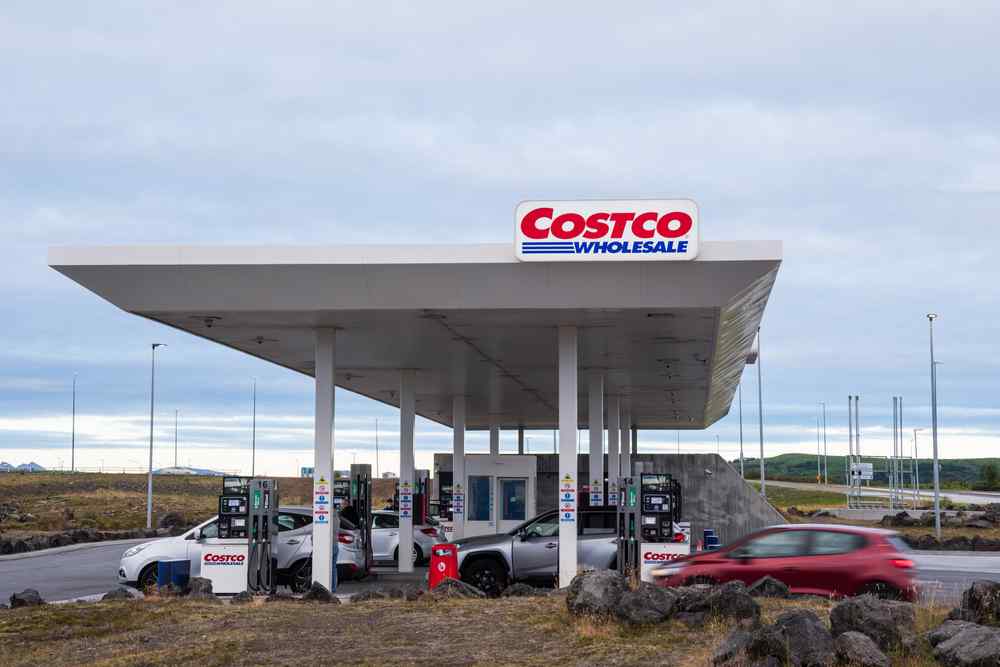
The cheapest gas stations in Iceland are around Reykjavik. If you have any control over where you fill up, use it before leaving the capital area. The cheapest option is Costco.
Costco near Reykjavik is often the cheapest place to fill up. Recent prices sat around 193 ISK per liter ($1.56/L). The catch? You need a Costco membership.
If you already have one, it's worth the detour. If you're visiting Iceland for a few days and wouldn't otherwise use Costco, the savings probably won't justify the membership cost.
Good Alternatives
If Costco isn't an option, stations such as Orkan, ÓB, and Atlantsolía regularly appear among the cheaper self-service choices around the capital.
Recent Reykjavik petrol prices ranged between roughly:
- 203-233 ISK/L ($1.64-$1.88/L) for gasoline
- 242-265 ISK/L ($1.95-$2.14/L) for diesel
On a typical Ring Road trip in a mid-size vehicle, consistently choosing the cheaper end of that range can save around 4,000 ISK ($30). Not life-changing, bu at least still enough for lunch and a coffee.
Once You Leave The Larger Towns
The further you head into the east, the Highlands, or more remote stretches of Iceland, the fewer choices you have. Prices climb, and stations become less frequent. And convenience starts winning over savings.
Every season, somebody heads into those areas on half a tank because the map showed a station nearby. The map wasn't wrong. The station existed. It was just another 120 kilometers up the road.
We usually remind customers heading east to top up before leaving Reykjavik, Selfoss, or Akureyri. It's the easiest way to avoid paying premium prices simply because you ran out of options.
How to Pay at Gas Stations in Iceland
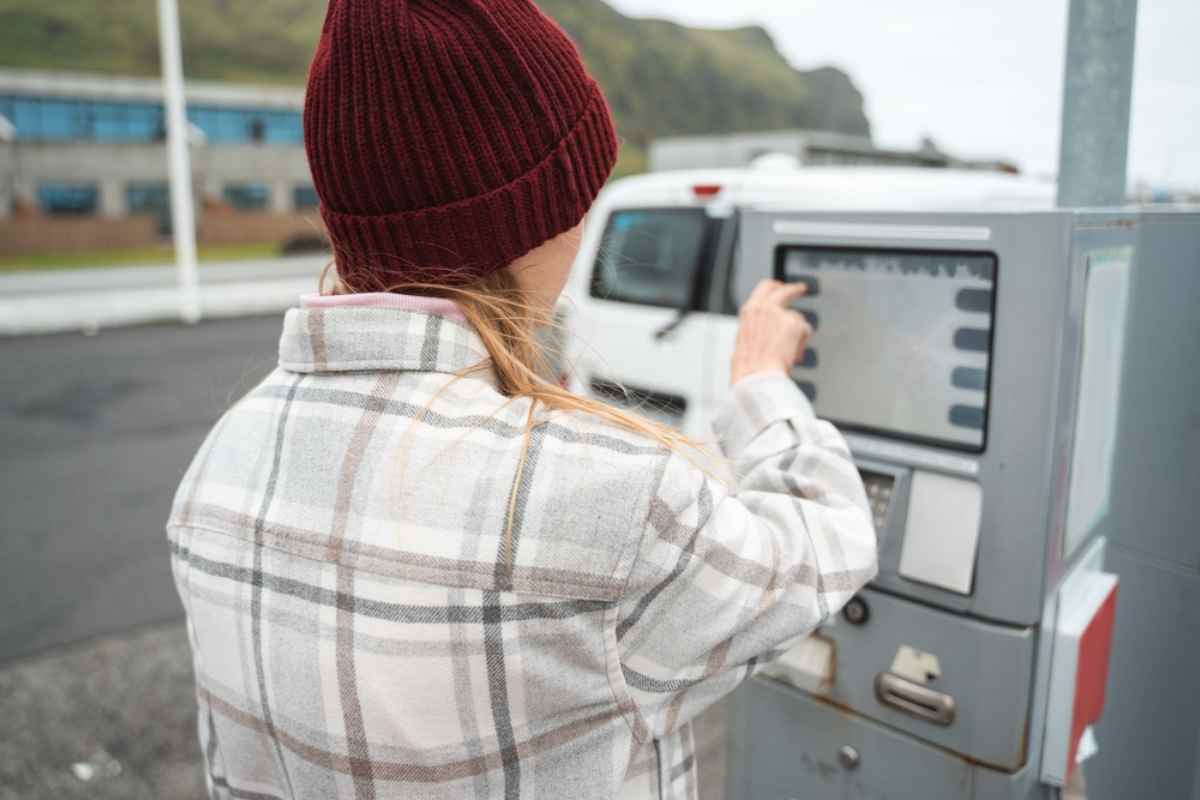
Most gas stations in Iceland are self-service, and many operate around the clock without staff on site. That's one of the first surprises for visitors who assume they'll be able to pop inside and ask for help if something goes wrong.
Bring a Card With a PIN
A credit or debit card with a four-digit PIN is the safest option. Some automated pumps won't accept signature-only cards, and discovering that at an unmanned station late at night is not ideal.
No PIN? Use a Prepaid Fuel Card
If your card doesn't work at the pump, prepaid fuel cards are a genuine backup. N1, Iceland's largest fuel network, recommends them for exactly this reason. Apple Pay and contactless payments generally work at N1 service points too.
Watch The Authorization Hold
This surprises a lot of visitors. Selecting ‘Fill Up’ can place a temporary hold of around 22,000 ISK ($178) on your card. The unused amount is usually released within a few days, but until then, it can reduce your available balance.
If you'd rather avoid that, choose a fixed amount instead:
- 5,000 ISK ($40)
- 10,000 ISK ($80)
If you need more fuel, simply repeat the process. It's a small adjustment that prevents unnecessary panic when checking your banking app halfway through the trip.
How the 2026 Kilometer Fee Changes the Real Cost
Low pump prices no longer tell the whole story. From January 1, 2026, Iceland moved part of its road funding off fuel taxes and onto a distance-based charge. For passenger vehicles up to 3.5 tonnes, the official government rate is 6.95 ISK per kilometer (roughly $0.05-$0.06/km). How that translates into your holiday budget depends on how your rental company applies it.
Some rental companies charge the fee based on the actual distance driven. Others use a fixed daily equivalent instead. The important thing is that the kilometer fee sits alongside your fuel costs rather than replacing them.
Using our 1,800 km example, the government rate works out to approximately 12,500 ISK ($80-$85) in road charges. Add that to the estimated fuel bill of around 40,000 ISK ($320) for a mid-size vehicle, and the total driving cost climbs to roughly 52,500 ISK ($400-$410).
That is the part older articles miss. Fuel spend and road-usage charges are now two separate lines in your budget. A guide that quotes only the pump price answers half the question and leaves travelers short.
Before you book, check how your rental company handles the kilometer fee. Some include it in the advertised price, while others list it separately. Either way, it deserves a place in your trip budget alongside fuel.

How To Spend Less on Gas in Iceland
The savings are not glamorous, but they stack.
- Check a live tracker before filling. Bensinverd and Gasvaktin show current local prices. The capital spread alone can save around 3,913 ISK (about $32) on a Ring Road tank, as shown above, just for choosing the cheaper forecourt.
- Fill up before leaving the Reykjavik area. It is your cheapest, most reliable fuel stop. Remote stations cost more and run drier, and you do not want to discover that at a quarter tank.
- Use Costco only if membership makes sense. At 193.3 ISK per liter ($1.56/L) it is cheap. The card is not free, so the saving only counts if you would clear the membership cost.
- Choose the smallest vehicle that fits your trip. The gap between 7 and 12 L/100km is hundreds of dollars across a full loop, which is worth weighing when choosing the right campervan. A big 4×4 is great for the Highlands and a waste of money on the paved Ring Road.
- Drive for the conditions. Winter cold, persistent headwinds, gravel roads, and Highlands climbs all push consumption above the neat spreadsheet figures. A few Iceland driving tips help keep real-world mileage down because it is usually worse than the brochure.
Frequently Asked Questions
How much is gas in Iceland right now?
As of June 2026, gasoline averages about 221.72 ISK per liter ($1.79/L) nationally, while capital-area self-service stations run roughly 203 to 233 ISK per liter, so expect plenty of variation.
Is diesel more expensive than gas in Iceland?
Usually, yes. As of June 2026, diesel runs about 255.64 ISK per liter ($2.07/L) nationally, against roughly 221.72 ISK ($1.79/L) for gasoline, before local station variation and loyalty discounts apply.
Where is the cheapest gas in Iceland?
Costco near Reykjavik is often cheapest at about 193 ISK per liter ($1.56/L), but membership is required. Capital stations like Orkan, ÓB, and Atlantsolía also post low self-service prices today.
Do Iceland gas stations take credit cards?
Most are self-service and do accept cards, but you need a four-digit PIN. Choosing a fixed amount rather than fill-up helps avoid the temporary authorization hold that many travelers hit.
How much should I budget for Ring Road gas?
For the 1,322-km Ring Road, a compact petrol car at 7 L/100 km burns about 92.5 liters, roughly 20,518 ISK or about $166, before any detours, side trips, and weather reroutes.
Does the 2026 kilometer fee replace fuel costs?
No, not entirely. Since January 1, 2026, Iceland has moved part of road funding from fuel taxes onto a kilometer fee, so now budget for both fuel and road charges separately.
How Much Is Gas in Iceland? Final Takeaways
There is no single perfect answer to how much gas is in Iceland, and anyone who gives you one number is rounding off most of the story. As of June 2026, gasoline averages around 221.72 ISK per liter ($1.79/L), but your real cost depends on vehicle choice, how far you actually drive, which stations you use, and the 2026 kilometer fee now sitting alongside fuel.
A compact car on the Ring Road is a different budget from a big 4×4 wandering the Highlands. At Motorhome Iceland, we would rather see travelers leave with a realistic fuel budget than discover halfway around the Ring Road that ‘about right’ was not right at all.
Before every fill, check a live tracker. The number you saw last week has probably already moved.